
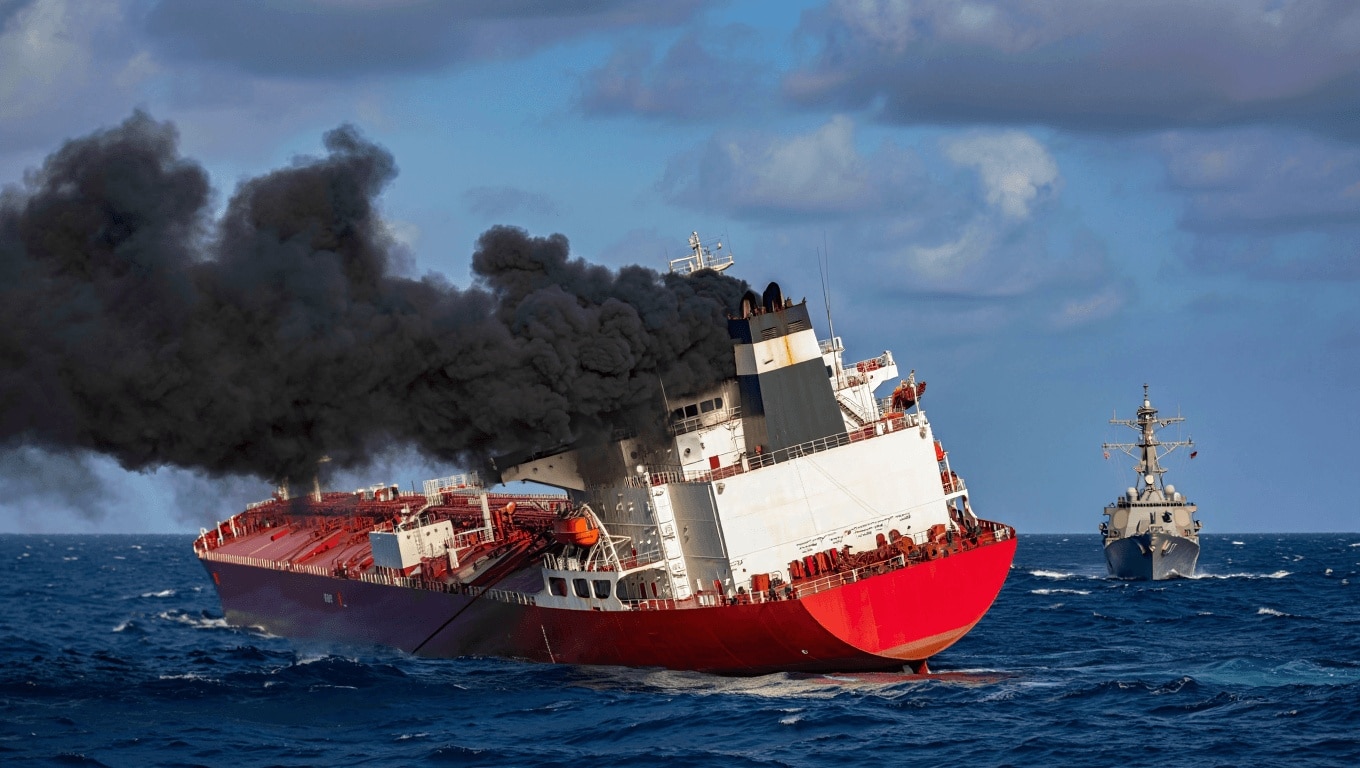
A fresh wave of strikes on commercial tankers in the Gulf has sharply raised shipping risks and disrupted trade routes this week, prompting immediate security responses and market unease. With more vessels reportedly damaged or disabled, carriers and governments are racing to protect crews and cargo while insurers and oil markets reassess the fallout.
Maritime authorities and industry monitors say the latest incidents — described as explosions, suspended fires, and suspected drone or remote detonations — occurred across busy corridors of the northern Arabian Sea and the Gulf region. In several cases crews were evacuated or ships diverted, and investigations are under way to determine responsibility and the exact mechanisms behind the attacks.
Where the pressure is felt first
The Gulf area remains a choke point for global energy flows, so any uptick in hostile activity quickly ripples through supply chains. Shippers are responding by altering routes, delaying sailings, or refusing to transit high-risk stretches without military or private security escorts.
That has practical consequences: voyages that avoid the Strait of Hormuz add days to transit times and increase fuel and hire costs, while port schedules and refined-product deliveries face interruptions. Smaller traders and refiners dependent on timely shipments are particularly vulnerable to such instability.
- Supply delays: Longer voyages and port diversions push back delivery dates for crude and refined fuels.
- Higher costs: Rising freight rates and added fuel use inflate shipping bills and can feed into consumer prices.
- Insurance pressure: Insurers typically widen war-risk zones or increase premiums, raising the cost of operating in the region.
- Crew safety: Seafarers face elevated danger and stress; some operators are rerouting to reduce exposure.
- Market volatility: Energy markets often react quickly to such disruptions, with short-term price spikes and heightened uncertainty.
Responses from the industry and authorities
Governments and navies in the region have stepped up patrols and issued advisories to affected shipping lines. Some commercial operators are contracting private security teams or coordinating transits in escorted convoys when possible.
International maritime organizations have warned carriers to remain vigilant and to report suspicious activity immediately. At the same time, port operators are reviewing security protocols and restricting access where necessary — a move that aims to prevent escalation but can also slow throughput.
What this means for markets and consumers
Because so much crude and refined product moves through the Gulf, prolonged disruption can push fuel and heating costs higher worldwide. While a single incident rarely derails global supply, a sustained pattern of attacks can tighten inventories and prompt sharper price reactions.
Insurers’ behavior is an early bellwether: when underwriters declare larger areas as high-risk, charterers and owners face added premiums that are normally passed on to buyers. This dynamic often appears first in higher freight rates and can later filter through to end-user prices.
Context and likely near-term developments
The incidents arrive against a backdrop of heightened regional tensions, where geopolitical rivalries can spill into maritime operations. Analysts say that the immediate priority for shipping companies is risk mitigation: rerouting, enhanced watchkeeping, and real-time intelligence sharing.
Expect more advisories, temporary route adjustments, and a visible presence of naval assets in major shipping lanes over the coming days. Market reactions will depend on whether the strikes persist, who is identified as responsible, and how quickly normal transit patterns are restored.
The situation remains fluid. Authorities are continuing investigations, and maritime operators are monitoring alerts and coordinating with insurers and naval forces. For readers tracking energy prices or relying on timely shipments, the message is clear: elevated uncertainty in the Gulf may affect costs and delivery schedules in the near term.
Similar Posts
- Iran restricts Strait of Hormuz passages: transit allowed only under strict terms
- U.S. expands insurance backstop for Strait of Hormuz to $40 billion
- Shipowners cut Hormuz transits: shipping delays and higher freight rates likely
- Shipping firms face wild rate swings: Strait of Hormuz reopening still uncertain
- Oil slips as potential Strait of Hormuz deal eases supply fears

A logistics expert, Ethan shares tips to optimize supply chains and reduce freight costs in global trade.

