
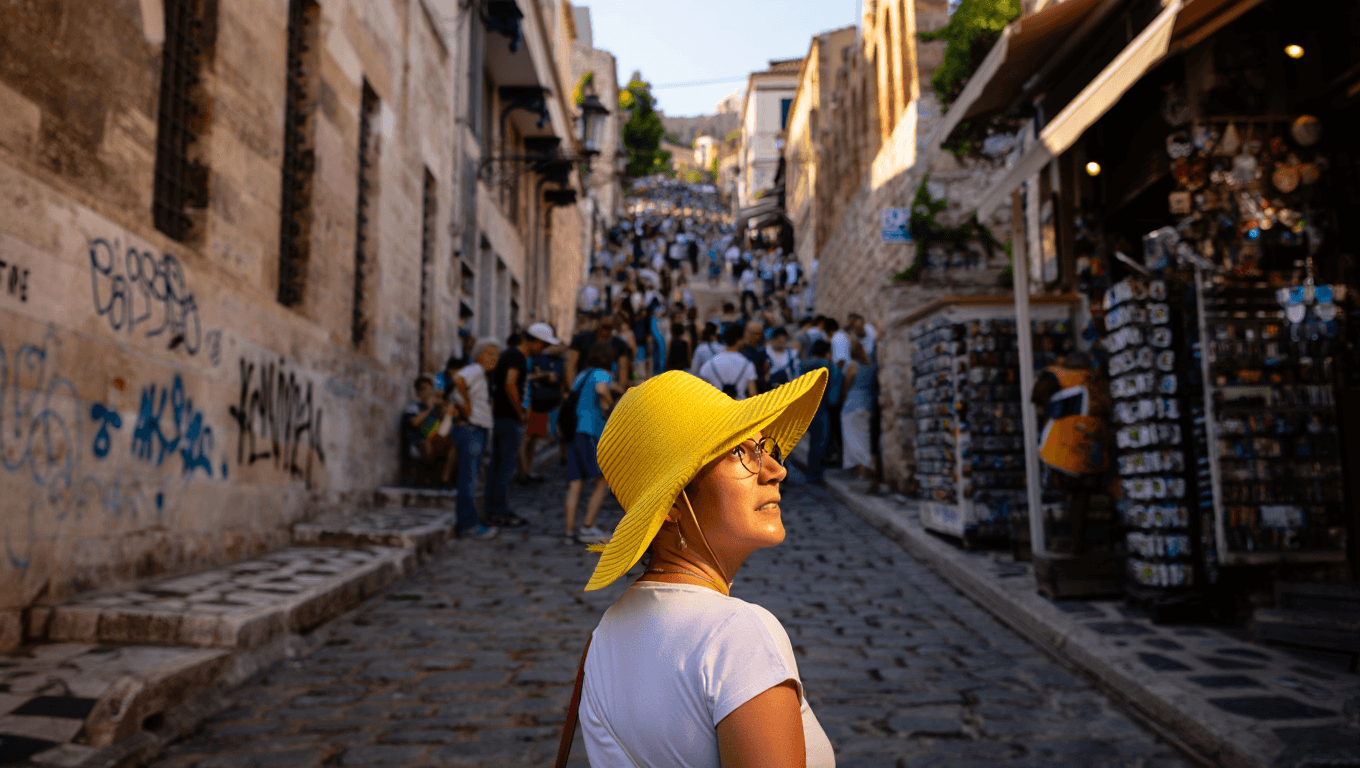
Tourism is reshaping Athens at an accelerating pace: city officials expect a record near 10 million visitors in 2025, a surge that is testing infrastructure, housing and the character of some of the capital’s oldest neighborhoods. The result is a city both pulsating with renewed cultural life and wrestling with the consequences of rapid, sometimes unmanaged growth.
A city reinvented after crisis
After a decade-long economic slump and the pause of the pandemic, Athens has experienced a lively rebound. Artists, restaurateurs and small-business owners moved into affordable spaces during hard times, turning previously quiet streets into hubs of cafés, bars and independent shops.
Those shifts revived neighborhoods and made Athens easier to discover on foot, but they also created fertile ground for investors who later converted entire buildings into short-term rentals. The transformation has been uneven: new energy and creativity coexist with rising rents and a shrinking local population in historic districts.
Why the surge matters now
City leaders and residents say the pace of growth is outstripping management capacity. Athens Mayor Haris Doukas has publicly warned that the capital’s popularity is becoming unsustainable and has launched measures to protect fragile areas, particularly around the Acropolis.
Two pressures stand out. First, the rapid conversion of housing into vacation lets has reduced long-term rental stock and pushed prices up for people who live and work in the city. Second, popular sites and narrow streets—Plaka and Monastiraki among them—are frequently overwhelmed during the high season, straining services and altering daily life.
Local voices on change
Tina Kyriakis, who runs a walking-tour company, sees both gains and losses. Psyrri, she says, is now one of Athens’s most energetic quarters—packed with cafés, small shops and short-term rentals—but the influx threatens the small, family-run workshops and century-old stores that give the city its texture.
Katia Tsimidopoulos, a long-time hotelier, points to a wider cultural revival: museums, festivals and a growing dining scene are drawing visitors to stay longer in the capital rather than rushing to the islands. Still, she stresses the importance of supporting locally owned hotels and businesses to keep the city rooted in its communities.
What to expect when you arrive
Visitors will find a mix of crowds and calm. Key landmarks now use timed-entry systems to limit queues at the Acropolis, and summer months bring dense foot traffic in the historic center. Off-peak seasons offer a markedly different experience: milder weather, fewer people at museums and lower prices for hotels and tours.
- Best times to visit: April–May and September–October for mild weather and lighter crowds; late afternoons offer a quieter Acropolis and memorable sunsets.
- Transport: Skip renting a car. Use the Metro, buses, trams and taxis; contactless payment is accepted on board many services.
- Where to stay: Favor family-run hotels and guesthouses in neighborhoods like Pangrati, Mets or Neos Kosmos to experience local life.
- Book ahead: Reserve timed tickets for major sites and rooftop bars during April–October.
- Day trips: The Athens Riviera is an easy escape for beaches and a sunset visit to the Temple of Poseidon at Sounion.
Neighborhoods beyond the postcard
Plaka and Monastiraki remain magnet spots for first-time visitors, but the city yields rich experiences away from those streets. Pangrati offers a lively café culture and neighborhood restaurants, Neos Kosmos has become a hotspot for contemporary Greek cuisine, and Mets is quieter, with neoclassical architecture and small bakeries frequented by locals.
These districts highlight an enduring truth about Athens: the city’s appeal lies as much in everyday life—corner markets, late-night cafés, municipal festivals—as it does in its antiquities.
Culture, hotels and the long view
Athens’s cultural institutions are concentrated in the center: from the Cycladic and Benaki museums to contemporary spaces and longstanding festivals. Hoteliers who have operated through decades emphasize that the city serves a broad range of budgets and that intimate, locally run properties help maintain neighborhood continuity.
That continuity is visible in small, enduring businesses—bakeries, grocery shops and family hotels—that anchor communities and offer visitors a window onto daily Athenian life.
Practical snapshot for travelers
Plan with both the heritage sites and community impacts in mind. Booking options that support local businesses, visiting outside peak hours, and spreading visits across lesser-known neighborhoods all reduce pressure on crowded streets.
Ultimately, Athens today is a place of contrasts: an ancient city with renewed cultural vitality, facing contemporary challenges from skyrocketing visitor numbers and housing market shifts. How locals, planners and visitors adapt over the next months will shape whether the capital’s revival preserves the very qualities that make it worth visiting.
Similar Posts
- Barcelona overtourism: smart tips to avoid the crowds and enjoy the city
- Discover Geneva’s Top 8 Day Trips: Unforgettable Escapes Close to Home!
- Explore Egypt’s Rich History: How Contemporary Culture Revives Ancient Traditions
- Vienna tourists: simple steps to protect the city while traveling now
- Walkability rankings: U.S. cities where walking outpaces driving

A globe-trotter and international trade enthusiast, Oliver explores the connection between business travel and trade opportunities.

