
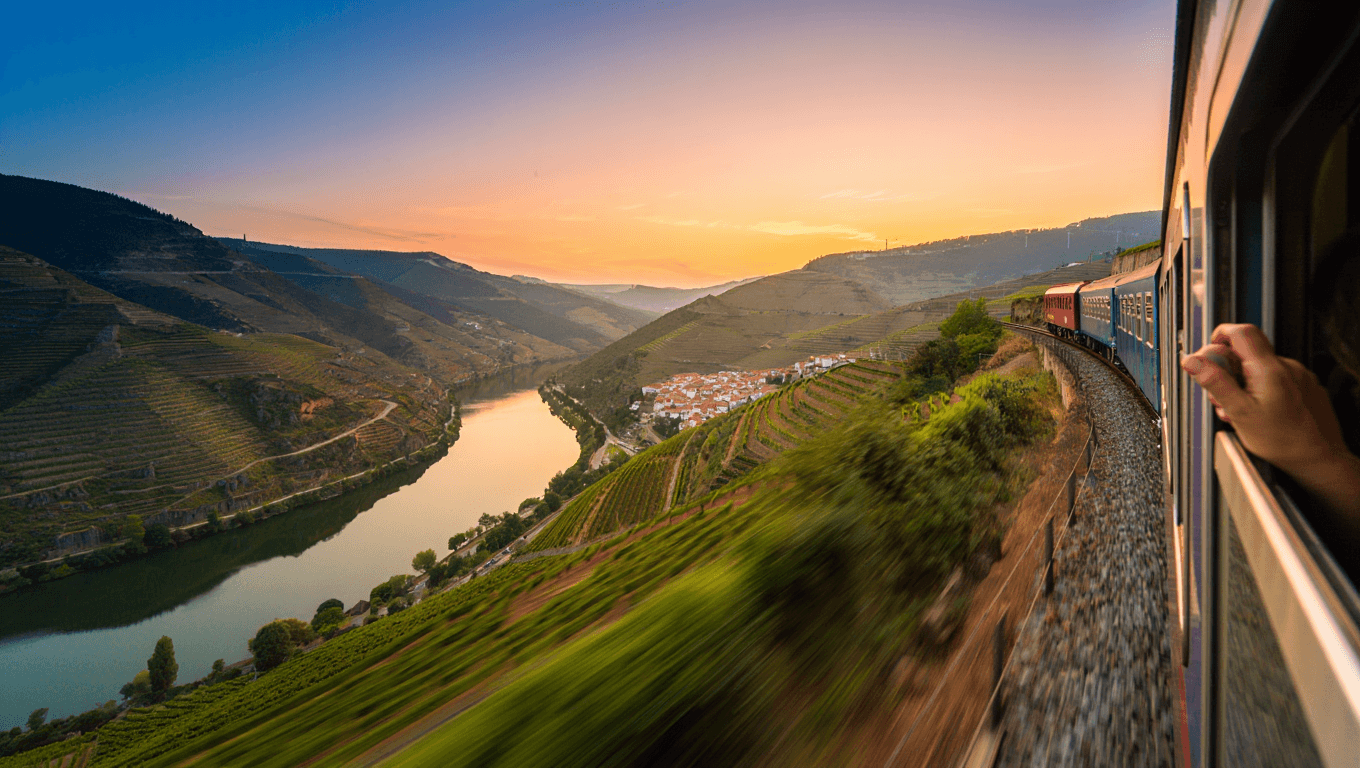
Train travel offers one of the clearest ways to read the Douro Valley’s landscape: a ribbon of river, steep terraces and small towns that tell the story of Portugal’s wine country. With growing interest in low-impact tourism, the Linha do Douro — the rail link from Porto to Pocinho — has become a compelling day-trip alternative to the more common river cruises.
An early departure gives you time to explore
To make the most of a single-day outing, plan for an early start from Porto’s historic São Bento station. An early morning service leaves around 06:30 and requires a change outside the city; there is also a later direct departure closer to 09:20.
Expect modest, older train cars and roomy windows rather than modern express comforts. The first hour winds through Porto’s outskirts and then opens into the valley: the river appears at Ribadouro, and from there the line hugs the Douro, passing vineyards and hamlets clinging to the slopes.
Why Pinhão is the right stop for lunch
Pinhão functions as the valley’s social hub for half-day visitors. The station itself is decorated with tile panels and the waterfront is compact and walkable. Local restaurants and riverside terraces serve regional dishes that pair naturally with tasting sessions at nearby wine estates.
Pinhão also offers small producers and a renowned butcher, so you can choose between a sit-down meal or assembling a picnic to enjoy by the water. Several quintas in town organise tastings of both table wines and fortified styles — a practical way to sample the region without travelling far.
- Best seats: Sit on the right-hand side when travelling from Porto to Pinhão for the clearest river views; switch to the left between Pinhão and Pocinho for the most dramatic final run.
- Travel time: The full route is roughly 200 km (about 125 miles) and takes most of a day each way.
- Return planning: If you want time in Pinhão and still make it back the same day, catch the mid-afternoon service out of Pinhão (around 15:44) to reach Pocinho in time for the last main return train.
- Cost: Round-trip fares are modest — in the ballpark of €30 — though splitting the journey into separate segments will raise the total slightly.
The last stretch: wilder, rockier, quieter
After Pinhão the river narrows and the terrain turns more rugged. Bridges appear frequently, and small stopping points—little more than shelters—serve hiking trails and abandoned estates. This section is quieter than the parts nearer Porto and reveals vineyards that slope so steeply they seem to pour into the river.
Approaching Pocinho, the valley broadens and the landscape shifts to olive groves, a dam and energy infrastructure. The station at Pocinho preserves a wooden-era feel; it’s peaceful rather than bustling.
Practical timeline for a one-day round trip
- Depart São Bento early (about 06:30 with change, or take the direct service at about 09:20).
- Arrive in Pinhão mid-morning for a walk, lunch and a winery visit.
- Leave Pinhão mid-afternoon (roughly 15:44) to reach Pocinho and catch the last main return service.
- Expect to be back in Porto in the evening — typically around 20:30 if trains run on time.
The schedule can vary by season and weekday, so consult the national rail website or station timetables before you travel. Train frequency has declined compared with past decades, making planning important but also meaning you’ll often have quiet carriages and unobstructed views.
Quick tips for photographers and slow travelers
Light and weather change the valley’s mood dramatically. Summer brings long, sunny days ideal for wide vistas and vineyard colour; winter favours mist, low clouds and a more cinematic, intimate atmosphere. Carry layers, because mornings and evenings can be cool even in warm months.
If you prefer moving slowly over ticking boxes, book a later return and linger in town. The joy of the Linha do Douro is not only the scenery but the chance to sample the valley at human speed.
FAQs
When is the best time to travel? For clear light and longer days, late spring through early autumn is ideal. Winter offers moodier scenes and fewer tourists.
Can I buy tickets on the day? Yes; many travelers purchase at the station. During peak season or holidays, advance booking reduces risk.
Where to eat? Pinhão has the most choices for cafes and riverside restaurants. Bringing a picnic is a good budget option and suits the valley’s calm pace.
For anyone interested in sustainable tourism, regional food and wine, or simply a slow, scenic journey, the Linha do Douro remains one of northern Portugal’s most rewarding day trips. It’s a travel experience that still rewards patience and an early alarm.
Similar Posts
- Discover Top Car-Free Getaways Near Melbourne: Plan Your Escape Now!
- Alaska Railroad draws families nationwide: scenic train trip kids love
- Explore Europe by Night: Sleeper Train Links Brussels to Berlin
- Seville to Lisbon overland: trains, buses beat flights for cheaper, scenic travel
- Explore France’s Top 8 Cycling Routes: From Alpine Challenges to Scenic Wine Trails

A globe-trotter and international trade enthusiast, Oliver explores the connection between business travel and trade opportunities.

