
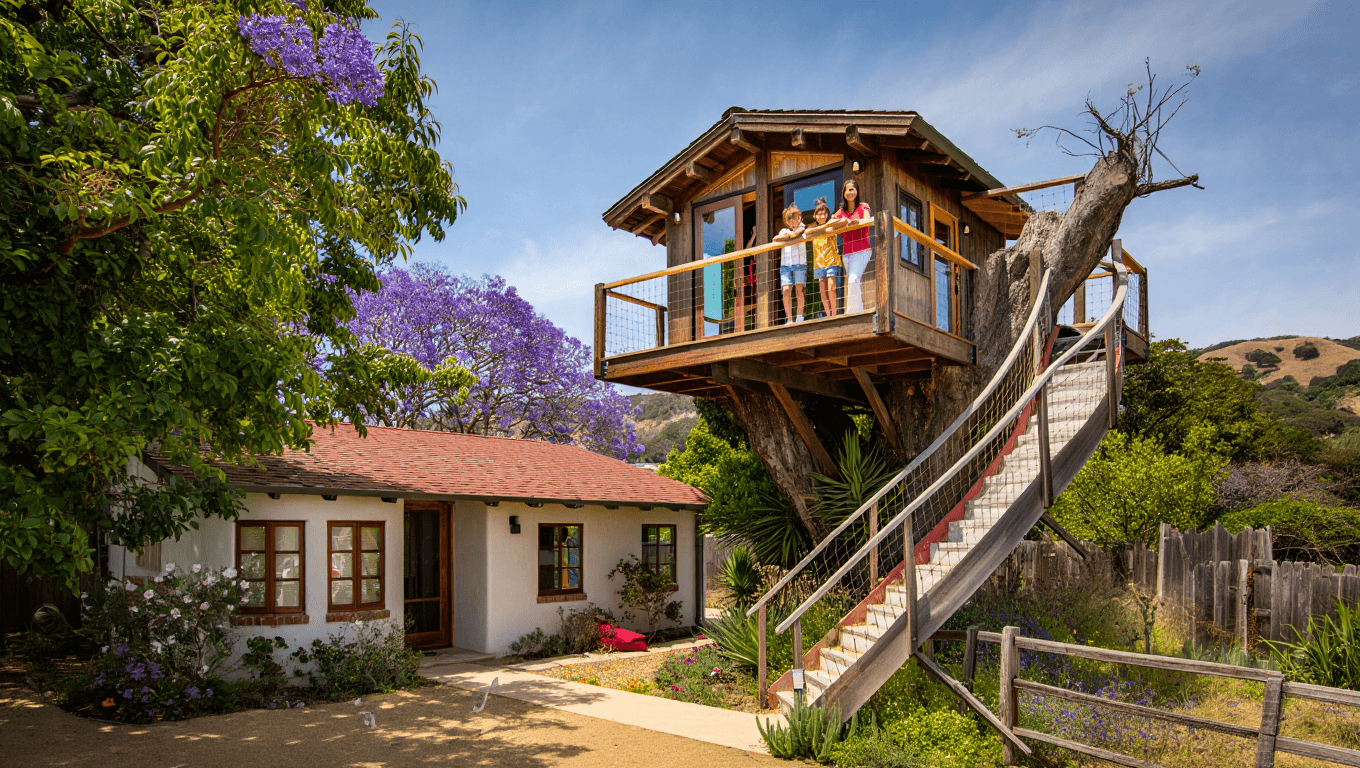
When a family’s main house was destroyed in the early 2025 Los Angeles wildfires, their small Montecito cottage unexpectedly became the place they needed to live. What began as a temporary refuge turned into a careful redesign, showing how thoughtful planning and targeted edits can convert a compact secondary home into a comfortable, everyday family residence.
At 1,300 square feet, the two-bedroom cottage presented tight constraints and practical demands. Interior designer Alex Spielman, founder of The Little Things, focused less on wholesale renovation and more on coaxing maximum function and warmth from the existing footprint—prioritizing built-in storage, multipurpose zones, and a few high-impact changes that improved daylight and flow.
- Designer: Alex Spielman, The Little Things
- Stylist: Danielle Armstrong
- Location: Montecito, California
- Size: Two bedrooms, two bathrooms — roughly 1,300 sq ft
Bunkroom that became the heart of the house
The attic, once an awkward unused space, was reimagined as a playful multi-bed suite tailored for the family’s three children. A bespoke white-oak built-in hosts three full-size bunks, each set into its own alcove and finished in a calming green palette with integrated lighting and fabric curtains for privacy.
Rather than erase the attic’s steep roofline, Spielman celebrated it—cladding the sloped walls with a lush botanical wallpaper to evoke a treetop hideaway. A concealed door tucked behind the bunks opens into a tiny “secret room” whose ceiling is dotted with stars, a deliberately whimsical counterpoint to the room’s otherwise practical layout.
Adjoining kids’ bathroom
Connected to the bunkroom, the children’s bath mixes durable materials with playful patterning: striped vinyl wallpaper for easy cleaning, custom millwork for storage, and finishes that keep the space feeling cohesive with the rest of the home. The sightline back into the bunkroom reinforces a sense of togetherness between the two rooms.
Playroom: a garage converted with safety in mind
Turning the garage into a multifunctional play area required several compromises. The room also houses the laundry, so design choices needed to serve both chores and play. Extra padding on the floor, a partial safety gate that keeps the space ventilated, and built-in activity zones—like a play kitchen and market—helped the room feel purposeful rather than patched-on.
These interventions allow the area to function as both a safe play zone for kids and a utilitarian service room for adults, an important balance in a small family home.
Kitchen: selective upgrades, big payoff
The approach here was surgical, not sweeping. Replaced counters, new appliances and hardware, and a fresh coat of paint revived the space without erasing the cottage’s original character. The most noticeable change was enlarging a skylight, which brought significantly more natural light and made the kitchen feel more open.
Living room and entertaining details
For everyday life, the living room was designed to be flexible and forgiving. A large ottoman on casters doubles as a coffee table and extra seating; French doors blur the line between indoors and outdoors.
Under the stairs, a compact custom bar with warm wood cabinetry and open shelving provides discreet storage and a spot for adults to gather—an example of how smart millwork can add functionality without sacrificing square footage.
Bedrooms and baths tuned to place
The primary bedroom draws on Montecito’s coastal and mountain setting with a restrained palette of soft blues and deep aubergine and patterned wallpaper to add texture without clutter. The en suite received modest treatments—painted vanity, warm clay plaster walls, and coordinated textiles—to align with the home’s overall tone.
Mudroom and backyard: small areas, big returns
An underused entryway was transformed into a family-ready mudroom with a patterned bench for tying shoes and angled hooks that catch backpacks and daily essentials—simple details that ease the rhythms of leaving home each morning.
Outside, built-in seating and custom cushions create distinct zones for dining and lounging, extending the interior’s tailored feel to the yard and making outdoor living an intentional part of the home’s plan.
Design takeaways:
- Precision matters: In tight footprints, every storage solution and furniture choice must justify its place.
- Dual-purpose spaces: Combining functions—play and laundry, seating and storage—keeps the plan efficient.
- Small investments, large impact: Strategic moves like a bigger skylight or new millwork can transform how a compact home feels.
- Emotional value: For a family recovering from wildfire loss, design choices also carried psychological weight—creating comfort and routine as much as beauty.
Alex Spielman’s work on this Montecito cottage illustrates how a limited footprint can be reshaped into a resilient, livable family home through targeted interventions and thoughtful detailing. Beyond aesthetics, the project offers a practical blueprint for homeowners who may need to adapt smaller dwellings into long-term residences after a disaster—or simply want to live more efficiently without losing character.
About the designer: Alex Spielman leads The Little Things, a Los Angeles–based residential studio known for layered, family-focused interiors that balance usefulness and warmth.
Similar Posts
- Cottage goes floral: inside a homeowner’s bold bloom makeover
- Stunning Family Home: Light, Spacious Interiors Await You!
- Historic 1920s kitchen refreshed without demolition: budget-friendly tweaks deliver big impact
- Utah family retreat becomes a showcase for modern mountain architecture
- North Carolina beach house reimagines coastal calm: inside a restful seaside retreat

A champion of quality and authenticity, Emily delves into Australian-made products and their impact on global markets. With a focus on sustainability, she helps readers understand why these goods are leading the trade world.

