
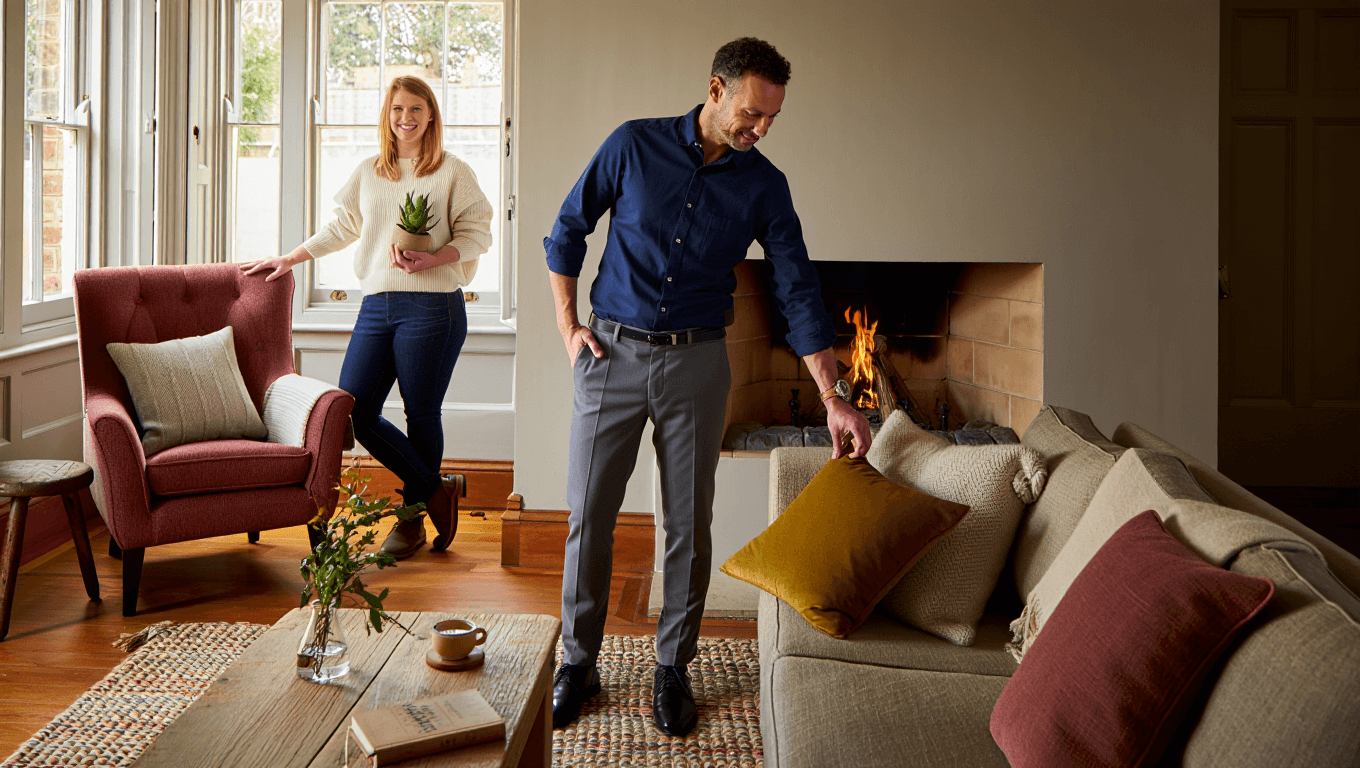
There’s a quietly commanding look to contemporary English interiors that feels both lived-in and carefully composed — an aesthetic increasingly sought after by homeowners who want warmth without nostalgia. As demand for comfortable, enduring design grows, British approaches offer practical cues Americans can adapt today for better-looking, more resilient homes.
Color that anchors a room
One immediate difference is the palette. British rooms often favor deep, earthy tones over stark white walls. These colors — think olive, warm ochre and muted terracotta — create a backdrop that reads as intentional rather than decorative.
James Arkoulis of Howark Design says these richer hues work particularly well with wood panelling and traditional joinery, helping rooms feel enveloping and mature. The payoff is practical: tones that hide wear, stage seasonal decor more effectively, and reduce the need for frequent repainting.
Objects as architecture
In several English homes, everyday items are elevated into room-forming features. A classic example: plates hung on either side of a fireplace, used like miniature artworks to frame a chimney breast and add pattern and history.
George Saumarez Smith’s Winchester library demonstrates how patterned wallpaper, a collection of Delftware, and tailored upholstery combine to make a compact space feel layered and purposeful — an approach that privileges personal collections over matched showroom sets.
Softening storage
Closed cabinetry is common in the U.S., but British kitchens and mudrooms often use fabric skirts in place of doors. Holly Vaughan of Vaughan Design & Development notes that draped storage introduces texture and warmth, making functional areas feel less clinical without sacrificing concealment.
Ranges that shape the kitchen
Large, enamel heat-storage ranges — notably Aga and Everhot models — are popular focal points in British country-house kitchens. Beyond aesthetics, they centralize cooking and can reduce the visual clutter of multiple modern appliances.
Andrew Petherick from Guild Anderson points out that these ranges keep heat and cooking activity concentrated, which allows surrounding cabinetry and surfaces to remain uncluttered and more sympathetic to a traditional scheme.
Durable, characterful fixtures
Another recurring piece is the farmhouse or Belfast sink: deep, durable and historically resonant. Designer Lucinda Kellaway describes it as both practical and evocative, conjuring family meals and heavy use while pairing neatly with contemporary cabinetry for a balanced look.
Bedrooms with purposeful drama
Canopy beds are more than a royal affectation in the U.K.; they answer a practical need in older, draftier houses while introducing scale and intimacy to a sleeping space. Laura Marino of Studio L London emphasizes measured contrast — using two different fabrics for linings and drapes to add weight, texture and visual respite.
Furniture that tells a story
What Americans call a hutch, British homeowners often call a dresser — a furniture piece that doubles as storage and display. Charlotte Boundy places antique dressers against tongue-and-groove panelling to showcase ceramics and everyday objects, creating the “lived-in” quality many designers prize.
Small changes can yield a distinctly English feel without a full renovation. For readers wanting a quick shift, try swapping a plain lamp for a patterned shade, or replacing cabinet doors with a tailored skirt.
- Earthy palette — Choose deeper neutrals (olive, ochre) instead of stark white to add warmth and longevity.
- Draped storage — Fabric skirts soften utility areas and introduce texture.
- Statement range — A single large cooker can reduce the need for multiple visible appliances.
- Farmhouse sink — Durable, functional, and visually rooted in tradition.
- Collectible display — Use dressers or wall-mounted plates to show personality and history.
- Layered fabrics — Heavier drapery and mixed textiles add depth and comfort, especially in older homes.
Why this matters now: homeowners and renters are chasing interiors that feel resilient — visually and functionally — as priorities shift toward comfort, sustainability and long-term value. Borrowing selectively from English design can help create homes that age well, resist fleeting trends, and feel authentically personal.
Adopting these elements doesn’t require copying an English cottage wholesale. Layer thoughtfully: start with a grounded color, introduce one or two heritage fixtures, and treat everyday objects as design assets. The result is less about imitation and more about composition — rooms that read as both intentional and welcoming.
Similar Posts
- Toronto Tudor transformed into English-style retreat by designer’s bold renovation
- Historic 1920s kitchen refreshed without demolition: budget-friendly tweaks deliver big impact
- North Carolina beach house reimagines coastal calm: inside a restful seaside retreat
- Rug trends set to reshape every home in 2026: designers reveal must-have styles
- Longevity trend 2026: how homes will adapt for longer, healthier lives

A champion of quality and authenticity, Emily delves into Australian-made products and their impact on global markets. With a focus on sustainability, she helps readers understand why these goods are leading the trade world.

