
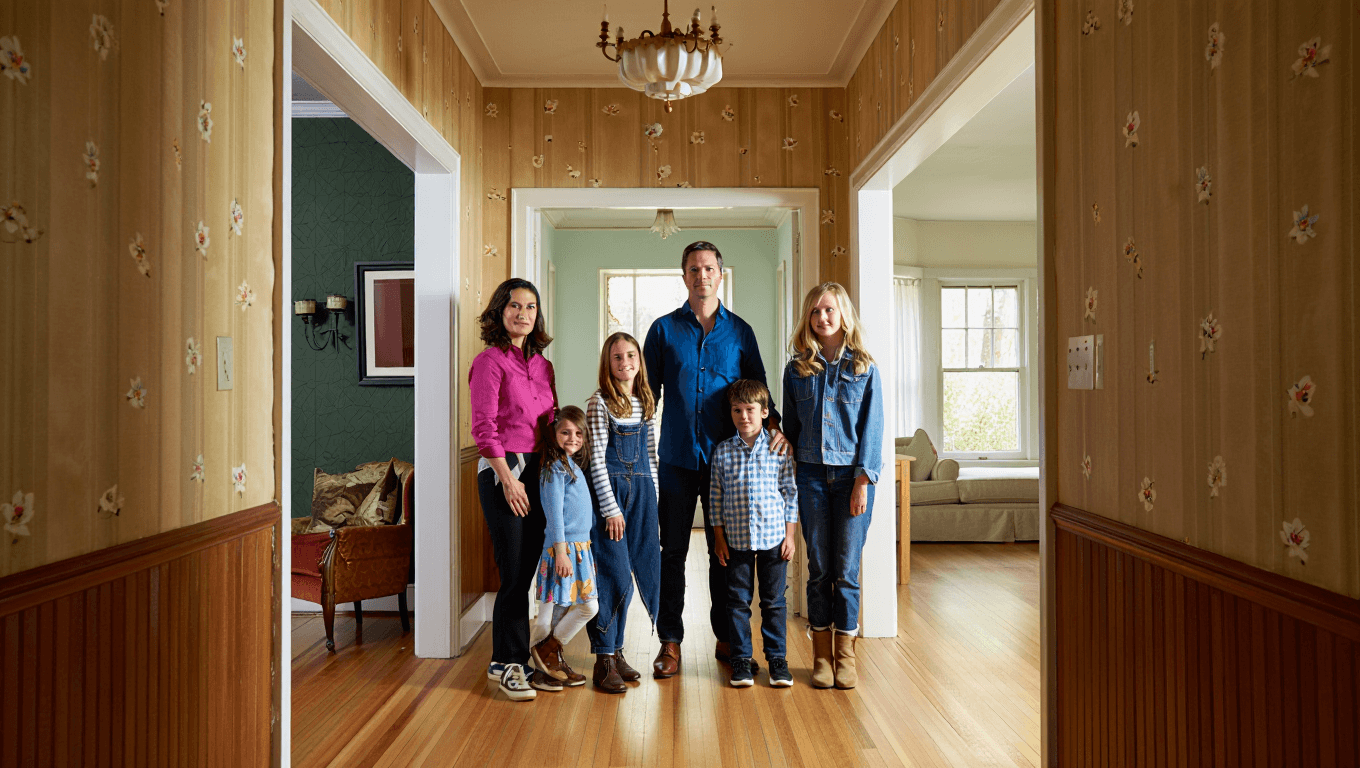
Before committing to a full overhaul, a family of five in Rye, New York, lived in their 1955 house for 18 months to learn how it actually functioned — a slow, deliberate approach that exposed what the home needed to support daily life. That trial period led to a major redesign that favors distinct, purpose-built rooms over a single open-plan layout, a choice with practical takeaways for families planning renovations today.
How the brief evolved
The homeowners wanted spaces that could coexist: quiet corners for adults, sprawling areas for kids, and formal settings for entertaining. They enlisted Dana Ferraro of Molly Patton Design to translate that program into a livable plan. Rather than erasing walls to create one continuous living area, Ferraro and her team carved the house into defined zones, expanding the footprint from roughly 5,100 to 8,400 square feet.
That shift from one big room to many rooms with strong identities is more than stylistic. It allowed each space to be tailored for a primary use — reading, hosting, homework, or play — reducing friction between activities and making the home feel simultaneously organized and generous.
Rooms that work for a family
The renovation produced a series of distinct interiors, each with a clear function and atmosphere. Highlights include a lacquered library finished in deep olive that serves as a quiet retreat, and a snug bar area designed as the household’s natural after-dinner gathering spot. Upstairs, the playroom above the garage was deliberately segmented into activity zones — climbing, music, art, and lounging — so children can roam without dominating common areas.
Color and textiles were used strategically to give rooms personality without disconnecting them from the whole. Vibrant wallpapers, cobalt upholstery, and patterned rugs create visual interest, while calmer spaces — notably the kitchen — act as visual pauses.
- Design approach: Zoned rooms rather than a fully open plan (referred to by the team as an anti–open-plan strategy).
- Designer: Dana Ferraro, Molly Patton Design
- Architect: Frank Marsella
- Builder: EC Builders
- Location: Rye, New York
- Size after renovation: About 8,400 sq ft; five bedrooms, seven bathrooms
Material choices with longevity in mind
Durability and adaptability were practical drivers. The team selected modular, replaceable flooring tiles in high-traffic zones and robust upholstery for family use. The children’s playroom uses individual Flor rug tiles that can be swapped as pieces wear out; the climbing wall was built so routes can be reconfigured as skills change.
The kitchen, intentionally understated, functions as a visual reset between more dramatic rooms. Glass-front cabinetry creates separation without isolation, and the enlarged footprint made space for a dedicated walk-in pantry and a butler’s pantry — features the homeowners said felt essential once the renovation was complete.
Selected room details
The designers reused and elevated original elements where possible: early clamshell cabinets were restored to display family china in the dining room, while a breakfast nook wrapped in latticework creates a garden-like alcove adjacent to the kitchen. In the primary closet and several bedrooms, designers leaned into layered patterns — a technique sometimes called pattern drenching — to make those spaces feel personal and collected.
Children’s rooms combine heritage-inspired textiles with durable finishes so the spaces can evolve as the kids grow. One daughter’s suite balances florals with tailored stripes to avoid an overly fussy look; the youngest embraced bold florals and a built-in window seat configured for reading and storage.
Design lessons for families planning renovations
There are clear takeaways from this project for homeowners weighing renovation options now:
- Live first, renovate second: occupying a house before major work can reveal how rooms are actually used and prevent costly missteps.
- Zone for coexistence: designated rooms reduce activity conflict and support multigenerational living.
- Choose adaptable elements: modular flooring and reconfigurable play equipment extend a room’s useful life.
- Prioritize a few dramatic moments: concentrated bursts of color or high-gloss finishes can create impact without overwhelming the home.
The Rye project shows how a family-focused renovation can blend tradition and modern needs: antiques and collected objects sit alongside purpose-built play areas and serviceable finishes, producing a home that aims to be both beautiful and truly livable.
About the studio
Molly Patton Design, founded by the late Molly Patton, is known for layered interiors that feel curated rather than catalogued. Ferraro, who worked with Patton for years before leading the studio, continues that ethos — combining antiques, bold patterns, and practical details to make homes that invite everyday use without losing refinement.
Similar Posts
- Stunning Family Home: Light, Spacious Interiors Await You!
- Marble anchors Rhode Island remodel: bold stone sets new interior trend
- Historic 1920s kitchen refreshed without demolition: budget-friendly tweaks deliver big impact
- Interior design pivots to small, purpose-built zones: open-plan living falls out of favor in 2026
- MasterChef finalist Jennifer Maune opens family castle: tour reveals lavish rooms and wine cellar

A champion of quality and authenticity, Emily delves into Australian-made products and their impact on global markets. With a focus on sustainability, she helps readers understand why these goods are leading the trade world.

