
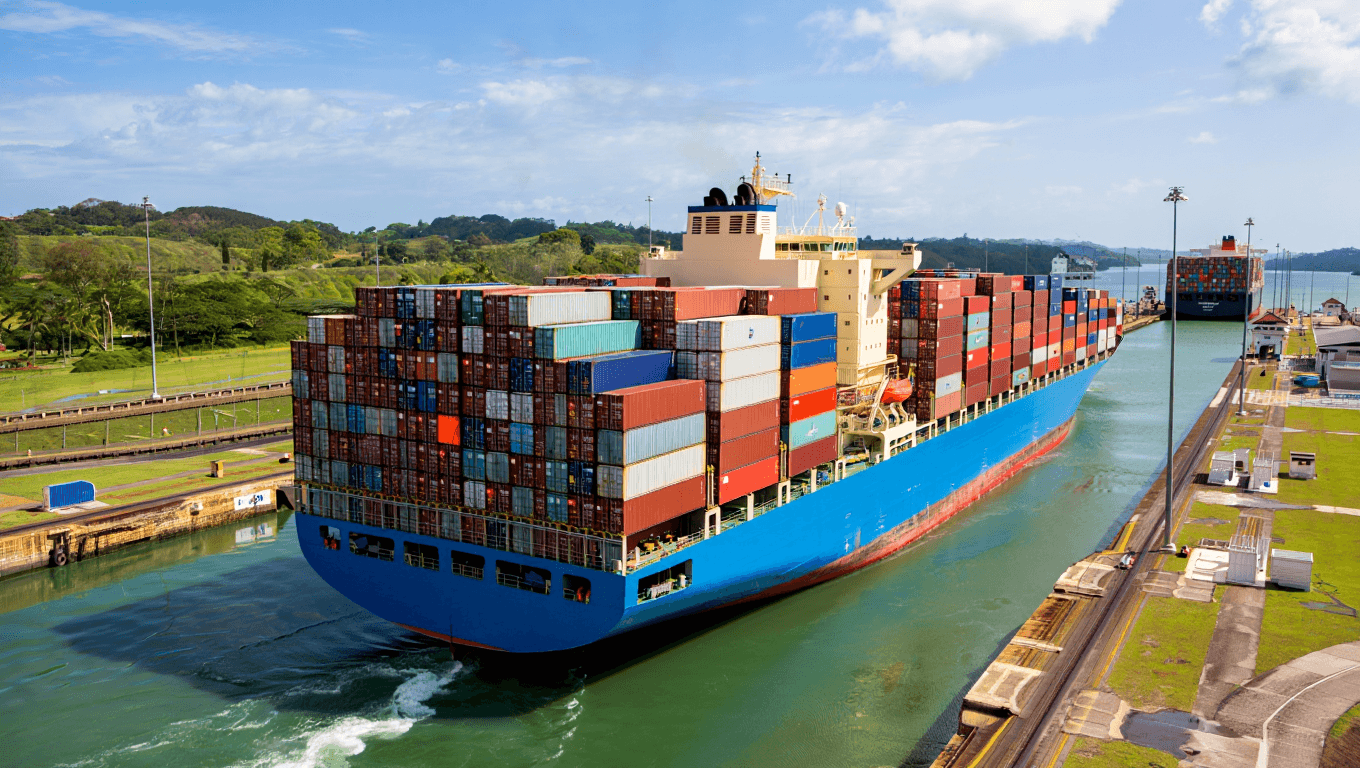
Companies are increasingly spending millions to secure passage through the Panama Canal, with some transactions approaching $4 million as firms try to avoid growing delays and transit restrictions. The surge in premium charges is reshaping shipping decisions and could raise costs for everything from consumer goods to fuel within weeks.
Why firms are paying top dollar now
Shipping lines and cargo owners are facing an unusual squeeze: lower canal throughput caused by water-level limits, sporadic congestion at the locks, and a backlog of vessels have all combined to make guaranteed passage scarce. When timing is critical — for seasonal inventory, perishable freight, or tightly scheduled energy deliveries — paying for expedited or prioritized slots becomes a business decision rather than an option.
Industry specialists say the situation has intensified over the past year as the canal authority and operators introduced stricter scheduling and, in some cases, premium-access mechanisms to manage demand. That has opened the door for brokers and operators to negotiate high fees for earlier transit windows.
Who is paying, and what for?
Not every shipment commands a seven-figure premium. The highest payments tend to involve large, high-value flows where delay carries an acute cost: container lines racing to meet retailer deadlines, liquefied natural gas (LNG) shipments with narrow delivery windows, cruise companies adjusting itineraries, and owners of specialized breakbulk cargo. Smaller shippers often face indirect impacts through higher freight rates charged by carriers that absorbed the premium to keep schedules.
| Type of shipper | Typical reason to pay | Relative premium range |
|---|---|---|
| Major container lines | Maintain retail delivery windows and avoid cascading schedule disruptions | $100,000 to several million |
| LNG and energy exporters | Meet contracted delivery slots and prevent market penalties | $250,000 to $4,000,000 |
| Cruise operators | Keep itineraries and passenger commitments | $50,000 to $500,000 |
| Specialized or time-sensitive bulk cargo | Reduce spoilage or enable factory schedules | $10,000 to $1,000,000 |
Short-term fixes, long-term consequences
In the near term, paying for priority transit can be an effective way to avoid costly production stoppages or missed market opportunities. But the practice also redistributes costs along supply chains. Freight rates may rise as carriers pass premiums to shippers, and consumers could see higher prices for goods that rely on time-sensitive logistics.
There’s also a strategic angle: some companies are rerouting around the canal — adding days and fuel costs via the Suez or the Cape of Good Hope — when premiums or delays make canal transit uneconomical. That choice can relieve congestion locally but increases overall shipping time and emissions.
What experts say and what to watch
Analysts emphasize that a few drivers are likely to persist: climatic variations affecting Panama’s watershed, structural constraints at the locks, and uneven demand spikes from trade patterns. Regulatory changes by the canal authority or investments in additional scheduling transparency could ease pressure, but those solutions will take time.
- Near-term indicator: queue lengths and average wait times published by canal authorities — an uptick typically precedes spikes in premium payments.
- Commercial signal: sudden increases in spot freight rates on key east–west lanes often reflect carriers absorbing or passing along premium transit costs.
- Operational fix to watch: announcements about revised reservation policies or priority-transit auctions from the canal authority.
For companies dependent on predictable transit times, the recent trend underscores a simple reality: logistics risk has real price tags. How widely those extra costs spread will depend on whether canal throughput stabilizes and whether shippers can adapt routing, inventory strategies, and contract terms to weather continued volatility.
Similar Posts
- Gulf tankers attacked again: Middle East shipping disruptions escalate
- Fuel price swings hit global freight: Iran tensions push shipping costs higher
- U.S. expands insurance backstop for Strait of Hormuz to $40 billion
- Iran restricts Strait of Hormuz passages: transit allowed only under strict terms
- Freight market shifts: Knight-Swift CEO predicts changes in enforcement and balance

A logistics expert, Ethan shares tips to optimize supply chains and reduce freight costs in global trade.

