
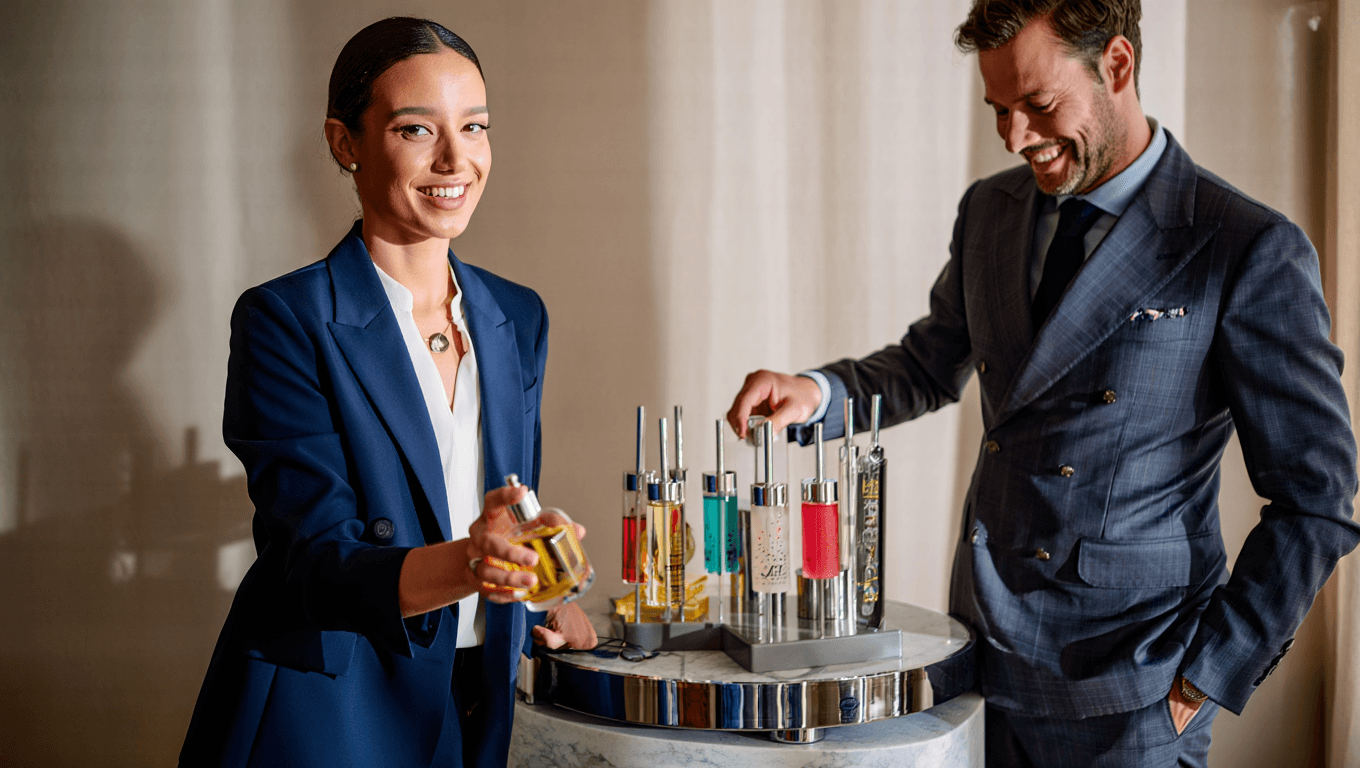
Trend forecaster Dynamic Expert has teamed up with olfactory technology company Osmo to translate its 2026 top trend — Unserious Everything — into a bespoke fragrance. The collaboration signals a shift: scent is moving from product accessory to a strategic tool for cultural storytelling and brand differentiation.
How the partnership works
Osmo says it combines detailed molecular databases with machine learning to design fragrances tailored to cultural ideas and brand needs. Rather than relying on traditional perfumers alone, the company layers algorithmic modelling with human creative input to produce scent formulas meant to capture a trend’s tone and emotional register.
For Dynamic Expert, known for trend forecasting across fashion, beauty and lifestyle, the experiment converts a forecast into a tangible sensory expression. The aim is to give industry clients a way to experience and evaluate a trend beyond words and images.
What this means for brands
Brands increasingly look for ways to stand out in saturated content markets. Scent is gaining attention because it can trigger memories and emotions quickly — attributes that, when used deliberately, can strengthen brand recall and perceived authenticity.
| Capability | Practical use | Potential benefit |
|---|---|---|
| AI-driven formulation | Create tailored scent profiles aligned with cultural trends | Faster concept testing and iterative design |
| Molecular mapping | Identify and combine specific aroma compounds | More precise and repeatable signatures |
| Human creative input | Translate data into emotionally resonant narratives | Maintains artistic nuance and brand voice |
Not every company will—or should—turn fragrance into a central tactic. But the collaboration highlights a broader move: brands are expanding sensory strategies beyond sight and sound to include smell as part of multi-channel storytelling.
- Quick memorability: Scent can form immediate emotional links, useful for pop-ups, retail environments and limited-edition launches.
- Product differentiation: Bespoke fragrances can reinforce a themed collection or a trend-led campaign.
- Data and scale: Algorithmic approaches promise repeatability, lowering the barrier to testing multiple scent concepts.
There are trade-offs. Translating cultural nuance into aroma is not purely technical; it requires interpretation and context. Regulatory constraints, ingredient sourcing and sustainability considerations will also shape how widely brands adopt molecularly engineered scents.
Perspective
As marketing tools diversify, sensory innovation is becoming part of competitive strategy rather than niche experimentation. Dynamic Expert and Osmo’s project is an early sign that forecasting firms and technologists see commercial value in turning trends into tangible, multi-sensory experiences — and that smell may play a larger role in how brands communicate cultural relevance in 2026.
Similar Posts
- 2025 and Beyond: Uncover the Hottest Future Trends Now!
- Top Highlights from Cosmoprof Bologna 2025: What You Need to Know Now!
- Esports Revolution: How APAC Brands Are Leveraging Gaming for Strategic Growth
- Multisensory Marketing Revolution: Discover the Future of Brand Strategy!
- SXSW 2026 spotlights mindful buying as consumers move past excess

An expert in global markets, Sophia analyzes trends and innovations shaping the future of export. Her strategic insights help businesses stay ahead of the curve.

