
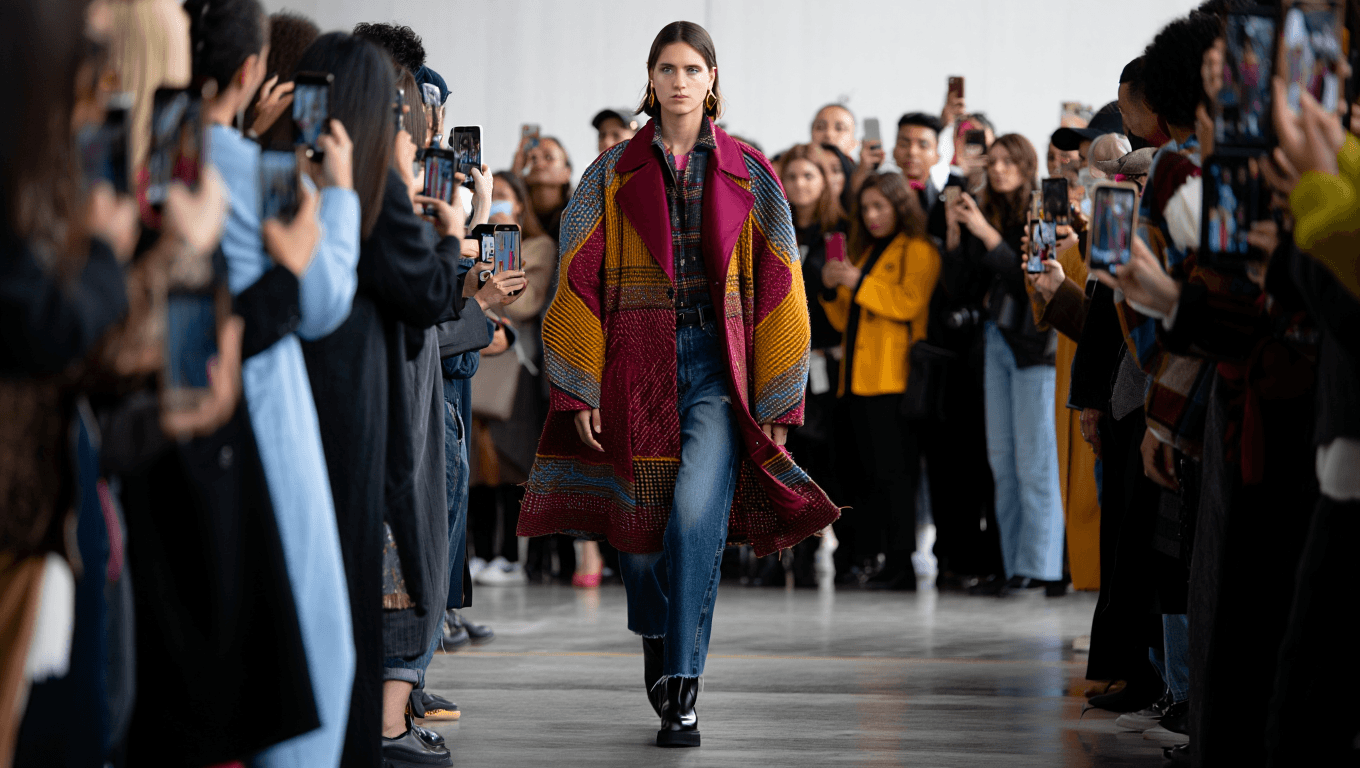
Bogotá Fashion Week returned this year as a stage for practical reinvention: designers fused heritage craft with garments designed to cope with unpredictable weather and growing consumer demand for durability. The collections on show signal a regional fashion scene that is increasingly thinking global—while responding to climate realities and sustainability expectations today.
Earthy textures, reclaimed roots
Several labels leaned into materials that read like a map of the landscape—textiles with a lived-in feel, muted clay and sepia palettes, and finishes that suggest long use rather than fast turnover. These choices were not purely aesthetic: many houses emphasized traceable, lower-impact fibers.
La Petit Mort stood out for its hand-finished wovens and a palette that favours weathered tones, while smaller ateliers highlighted repair techniques and certified wools and cottons. The result felt less like trend chasing and more like design that anticipates longer lifecycles for garments.
The rise of off-season dressing
With seasons blurring, wardrobes are following suit. What emerged repeatedly on Bogotá’s runways was a deliberate mixing of seasons—lightweight silhouettes paired with heavy knits, or ski-ready cuts rendered in tropical prints.
That approach speaks directly to Colombian realities, where coastal heat and Andean coolness can exist in the same country—and to consumers worldwide who want multipurpose pieces. Labels such as Sixxta and Swim Favors presented collections clearly aimed at those shoulder months when adaptability matters most.
Hyper-Bloom: florals in high relief
Florals arrived amplified: saturated hues, sculptural petals and layered textures that read almost architectural. The effect was theatrical without losing wearability; blooms were used to punctuate rather than overwhelm looks.
Designers including Andrés Pajón and Eloísa pushed these motifs into three-dimensional territory, creating pieces that register first as texture, then as pattern.
Sustainability remained a throughline across the schedule. From regenerative cotton experiments to visible mending traditions, many collections treated eco-conscious choices as design drivers rather than afterthoughts.
- Key trends:
- Earth tones & tactile wovens — durable materials and finishes that age well.
- Off-season dressing — garments designed to bridge shifting climates and extend wearability.
- Hyper-bloom florals — bold, three-dimensional botanical details used as structural accents.
- Repair and traceability — visible mending and certified fibers shaping collection narratives.
- Notable names to watch:
- La Petit Mort — artisanal finishes and certified natural fibers.
- Pitbullying — experiments with regenerative cotton.
- Sixxta & Swim Favors — season-blurring silhouettes for transitional climates.
- Andrés Pajón, Eloísa — floral work in layered, sculptural formats.
- What this means for shoppers: more adaptable pieces, investments in longevity, and a growing market for responsibly produced basics that still carry personality.
Beyond aesthetics, Bogotá Fashion Week suggested a practical pivot: designers are responding to material constraints and climate variability by building collections that last, that travel across seasons, and that carry local craft into global conversations. That shift is likely to influence buying patterns and retail offerings in the months ahead—both in Latin America and in markets watching for new, resilient approaches to seasonal dressing.
Our Senior Strategist, Sofia Martellini, reported from the event and notes that this season’s balance of craft, climate sensitivity and playful invention positions Colombian design as a source of ideas for an industry under pressure to adapt.
Similar Posts
- Fall/Winter 25/26 Runway Report: Discover the Latest Color Trends in Fashion!
- S/S 26 Catwalk Predictions: Unveiling the Next Big Trends in Womenswear!
- Milan fashion week: analytics reveal S/S 26 trends set to reshape retail
- Rug trends set to reshape every home in 2026: designers reveal must-have styles
- S/S 26 Paris Fashion Week Trends Revealed: Discover the Must-See Styles!

An expert in global markets, Sophia analyzes trends and innovations shaping the future of export. Her strategic insights help businesses stay ahead of the curve.

