
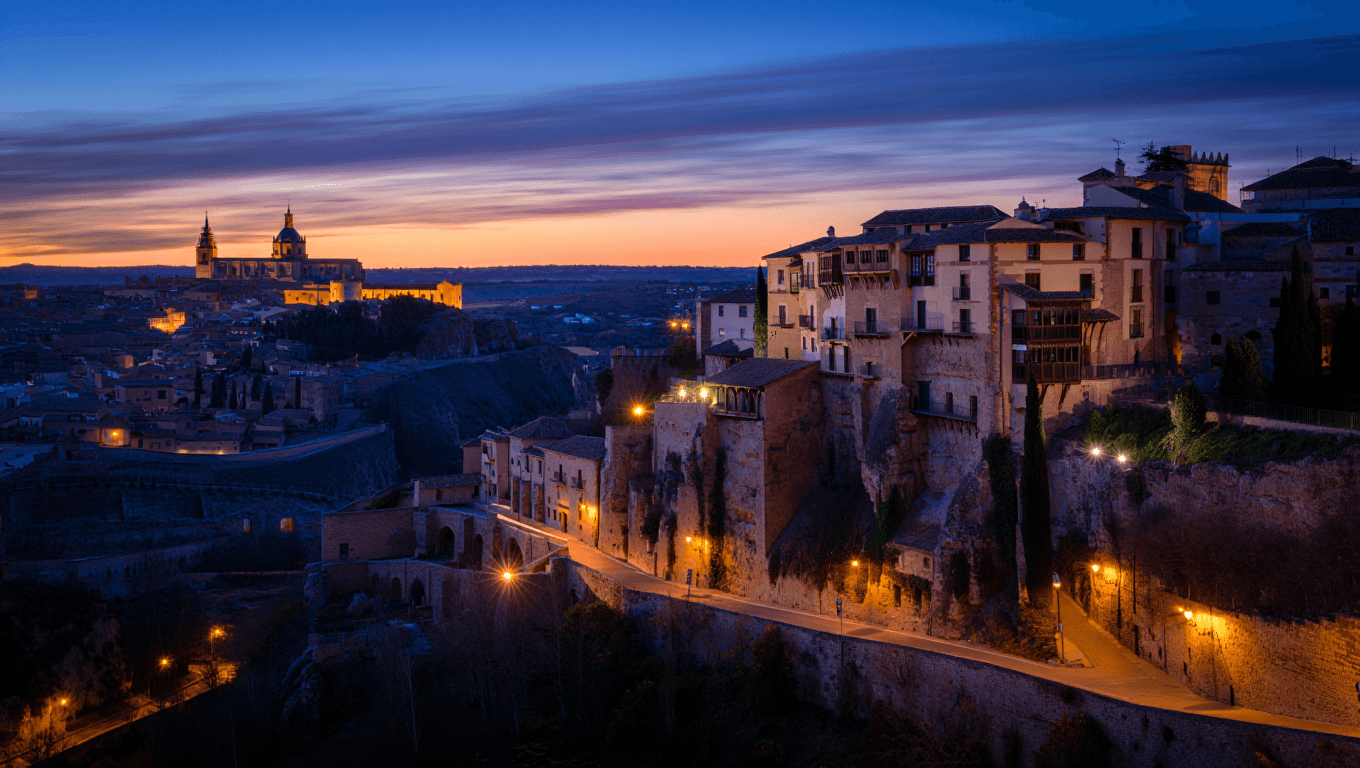
Two compact Spanish cities a short trip from Madrid—Cuenca and Toledo—pack layers of history into dramatic hilltop settings. Beyond their stone streets and medieval churches, recent nighttime illumination projects are changing how visitors see these places, extending the day and revealing details that daylight can miss.
Cuenca: cliffside medieval core and modern art
Cuenca’s old town clings to a rocky promontory between the Huécar and Júcar gorges, a landscape that shaped both its defenses and its architecture. The city’s compact casco histórico is a UNESCO World Heritage site for good reason: narrow alleys, fortified walls and unexpected viewpoints concentrated within walking distance of each other.
Start at the Plaza Mayor, overlooked by the town hall and the cathedral whose current neo‑Gothic face dates to the early 20th century. Inside, look for the Renaissance doorway and the carved wooden ceiling of the chapter house. Then follow Calle Canónigos downhill toward the river to see the city’s best‑known sight: the hanging houses.
The precarious balconies of the casas colgadas project from the cliff above the Río Huécar and make for striking photos at the Puente de San Pablo, the pedestrian bridge that frames them against the gorge. One of these cliffside dwellings now houses the Museo de Arte Abstracto, with important works by Fernando Zóbel and other mid‑20th‑century Spanish artists.
Walking north of the main square leads to the Iglesia de San Pedro — its baroque façade hides a coffered Mudéjar chapel — and to the Castillo de Cuenca remains, where panoramic views open out over the gorges. From the Mirador de la Hoz you can pick up the Sendero Periférico de las Hoces de Cuenca, a scenic trail that runs along the cliffs for several miles.
- Must-see in Cuenca: Plaza Mayor, Casas Colgadas, Museo de Arte Abstracto, Puente de San Pablo.
- Practical tip: Visit on a weekday and stay overnight—mornings and evenings have far fewer day‑trippers, and the light is best for photography.
- Walks: Allow at least half a day for the old town and another two to three hours if you plan the Sendero Periférico.
Toledo: a palimpsest of cultures
Perched above the Río Tajo, Toledo is often called the “city of three cultures” because of the centuries when Christian, Muslim and Jewish communities shaped urban life together. The streets are a dense network of monuments: mosques converted to churches, synagogues with Mudéjar detail, and Gothic cathedrals filled with masterpieces.
Begin at Plaza de Zocodover, the historical meeting point, and climb to the Alcázar, the fortress that crowns the city and has been rebuilt and repurposed across the centuries. From there, lose yourself in the medieval lanes toward the Catedral de Toledo, a high‑Gothic complex finished over two centuries and home to an exceptional collection of paintings and ornate woodwork.
Inside the cathedral you’ll find ribbed vaults, a 500‑year‑old artesonado ceiling in the chapter house and works by El Greco, Titian and Velázquez. Nearby, the Iglesia de los Jesuitas offers a baroque vantage point from its bell tower.
Toledo’s Jewish past is visible in the judería: the Sinagoga del Tránsito now houses the Museo Sefardí, while the Sinagoga de Santa María la Blanca—built by Mudéjar craftsmen—retains horseshoe arches and ornate stucco. The Monasterio de San Juan de los Reyes, with its double cloister and heraldic decorations, commemorates the Catholic monarchs’ reign and is one of the city’s finest Gothic ensembles.
- Key stops in Toledo: Alcázar, Catedral de Toledo, Sinagoga del Tránsito, Santa María la Blanca, Monasterio de San Juan de los Reyes.
- Timing: Plan a full day for core monuments; add a second day if you want time for museums and slower exploration.
- Accessibility: Expect steep, cobbled streets—good footwear is essential.
A new way to see old stones: night illumination
In recent seasons both cities have introduced projection and sound shows that animate historic façades after dark. Programs such as Luz Cuenca and Lumina Catedral de Toledo use 2D and 3D mapping to highlight architectural detail and to narrate building histories in vivid sequences.
These nighttime presentations matter beyond spectacle: they lengthen visiting hours, ease daytime congestion, and reveal craftsmanship that can be difficult to spot in harsh daylight. For photographers and casual visitors alike, the shows create fresh perspectives on familiar monuments and encourage a slower, more reflective pace.
Practical notes for visitors
Whether you pick Cuenca’s cliffside routes or Toledo’s dense historic core, a few simple choices improve the experience:
- Arrive early or late. Weekdays and twilight hours offer smaller crowds and better light.
- Combine a walking tour with at least one overnight stay to see both daytime details and evening illuminations.
- Buy cathedral and museum tickets in advance where possible to avoid queues.
- Bring layers—narrow streets and hilltop viewpoints can be cool after sundown, especially during the illumination events.
Cuenca and Toledo remain two of Spain’s most concentrated classrooms in stone: compact enough to explore on foot, but rich enough that a single visit only scratches the surface. The recent wave of night illuminations has only added another layer to their long histories—one that rewards returning visitors and first‑timers alike.
Similar Posts
- Discover Geneva’s Top 8 Day Trips: Unforgettable Escapes Close to Home!
- Discover Aspen: Top Tips for Effortless Travel and Navigation!
- Barcelona overtourism: smart tips to avoid the crowds and enjoy the city
- Top 10 Car-Free US Destinations for Summer: Explore America’s Best!
- Navigating Minneapolis in Winter: Discover the Surprisingly Easy Ways!

A globe-trotter and international trade enthusiast, Oliver explores the connection between business travel and trade opportunities.

