
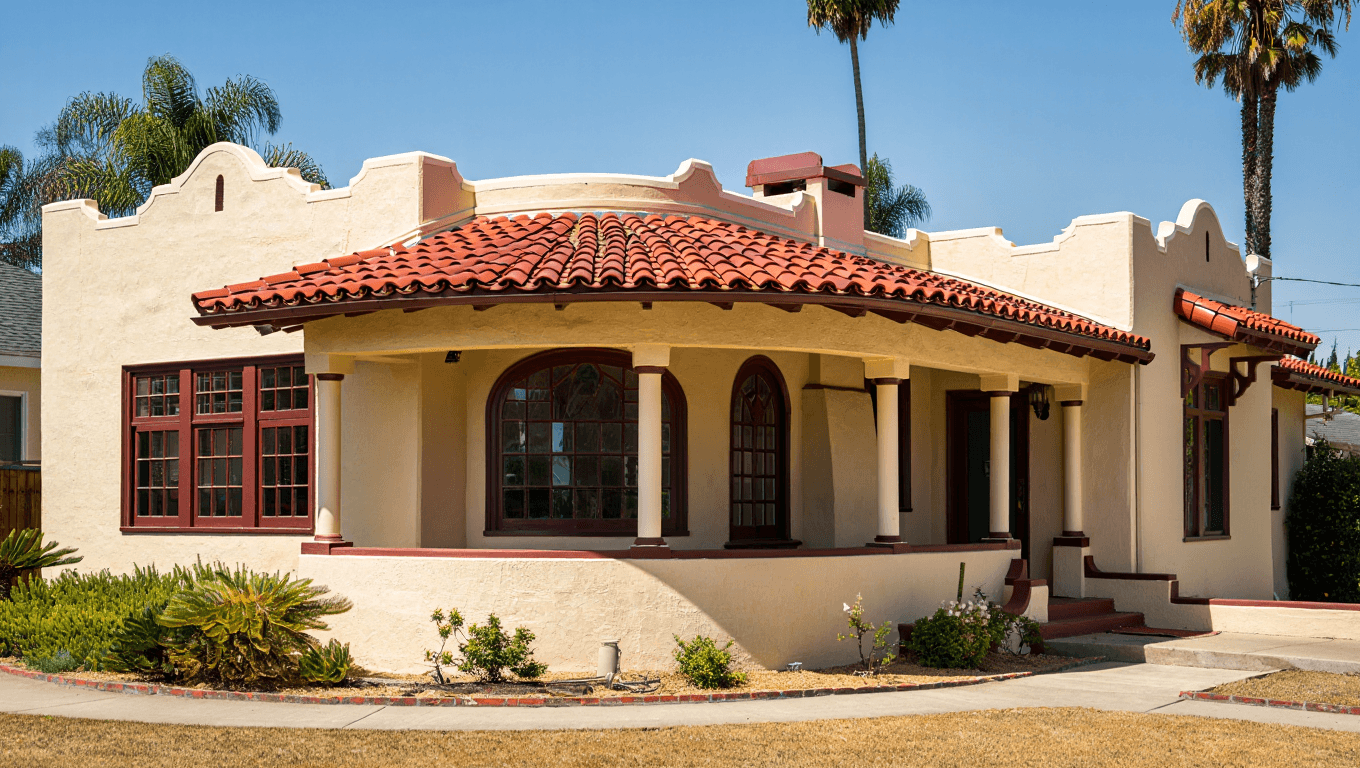
When the 2025 Los Angeles wildfires forced designer Claire Thomas and her family to relocate, they found a rare opportunity: a 1931 Spanish Colonial in Claremont—an original AIA Case Study house—waiting to be restored. What began as a recovery project quickly became a careful revival of period craftsmanship and Hollywood-era glamour, with choices that aim to preserve history while serving a modern family.
- Designer: Claire Thomas
- Location: Claremont, California
- Size: Four bedrooms, four bathrooms, ~5,100 sq ft
- Architectural pedigree: 1931 Spanish Colonial; original AIA Case Study house by Peter Ficker
From disaster to a historically informed restoration
The house arrived at Thomas’s doorstep with its bones intact but many finishes stripped away by a 1990s remodel. She set out to reintroduce the home’s early-20th-century character rather than apply a contemporary makeover. The goal: recover period details, layered ornament, and an overall sense of theatricality that nods to 1930s Hollywood without feeling museum-like.
That approach translated into interventions that were both structural and decorative—new cabinetry with aged hardware, patterned tile floors, and textiles chosen to echo the era’s textures. The result reads as deliberate and lived-in rather than staged.
Basement speakeasy: a subterranean showpiece
What had been a plain concrete cellar is now a luxuriously moody entertaining level. Thomas leaned into a dramatic palette—deep reds, jewel tones, and reflective mosaic tile—and anchored the space with period-style lighting that casts the room like a small nightclub. The theatrical vibe is purposeful: no exterior windows, muted clocks, and layered lighting make the basement feel like a private, all-night retreat.
At the far end, a screening area continues the same fabrics and carpeting, with movie posters selected by Thomas and her son to personalize the space. The design balances whimsy and function, signaling that the basement is meant for both family time and grown-up gatherings.
Kitchen and period references
Rather than retain the kitchen’s modern refit, Thomas reworked the footprint to reflect early-century aesthetics. Cabinet profiles were altered, fittings replaced with patinated hardware, and tile patterns were chosen to evoke the Golden Age of Hollywood. She specifically cites influence from a renowned Los Angeles modernist kitchen, aiming for a creamy, sunlit palette that feels both authentic and approachable.
- Strategy: Replace contemporary finishes with historically sympathetic materials
- Details: Patterned tile floors, aged metal pulls, classic cabinetry lines
Living spaces that tell a story
The house’s long living room presented a planning challenge: narrow width but considerable length. Instead of subdividing it awkwardly, Thomas embraced the scale—doubling typical seating arrangements to create two facing conversation areas that read as one grand room. Bookcases stocked with inherited volumes add a sentimental layer; the shelves are curated to feel like a family library rather than a showpiece.
Across the home, small theatrical touches appear: a Murano-style chandelier peeks into the primary sitting room, a sunroom is filled with plants and a shell pendant for a more casual counterpoint, and a dining room pairs woodland wallpaper with an eclectic antique table sourced at auction.
Bedrooms and bathrooms: whimsy, restraint, craft
In the primary suite, the color story—rich aubergine, rust and soft gold against warm clay walls—was chosen to feel sophisticated rather than childlike. A sitting room off the bedroom doubles as a work-and-watch nook, reflecting Thomas’s need to blend creativity with family life.
The primary bathroom was rebuilt from an awkward layout into a more classical composition, introducing a spacious tub alcove and bold Greek key tilework that references the neoclassical sets of 1930s film musicals. In other bedrooms, playful treatments—like a pirate-themed bunk room with ship-style bunks—mix high-design finishes with affordable DIY details, proving budget-friendly pieces can still be evocative.
Preservation choices with contemporary consequences
One of the renovation’s wins was protecting fragments of the original 1931 fabric—most notably a bathroom that retained its authentic tile. In rooms where original elements were lost, Thomas prioritized materials and finishes that feel congruent with the era rather than pastiche.
Her work illustrates a larger trend in design: homeowners and designers are increasingly balancing historical respect with modern needs—sustainability, family function, and emotional continuity—especially in the wake of climate-related disruptions that force people to rethink and, sometimes, relocate.
Notable features at a glance
- Architectural lineage: Restored focus on the home’s 1931 Spanish Colonial identity
- Period details: Greek key tiles, patinated hardware, neoclassical references
- Material moments: Barkcloth-inspired wallcoverings, patterned carpet, mosaic Fireclay tiles
- Family-first design: Flexible work spaces, durable textiles, playful kid rooms
Why this matters now: the project is a reminder that rebuilding after climate events can be an opportunity to recover cultural value, not just replace what was lost. By weaving historical awareness into practical renovations, designers like Thomas are creating homes that honor the past while accommodating today’s needs—offering a model for climate resilience that also preserves architectural identity.
Similar Posts
- Historic 1920s kitchen refreshed without demolition: budget-friendly tweaks deliver big impact
- Stunning Family Home: Light, Spacious Interiors Await You!
- North Carolina beach house reimagines coastal calm: inside a restful seaside retreat
- David Gandy’s Stunning London Dream Home: Perfect Family Sanctuary Revealed!
- Stunning D.C. Row House Transformation: Inside Mike and Courtney’s Chic Makeover by Jeremiah Brent!

A champion of quality and authenticity, Emily delves into Australian-made products and their impact on global markets. With a focus on sustainability, she helps readers understand why these goods are leading the trade world.

