
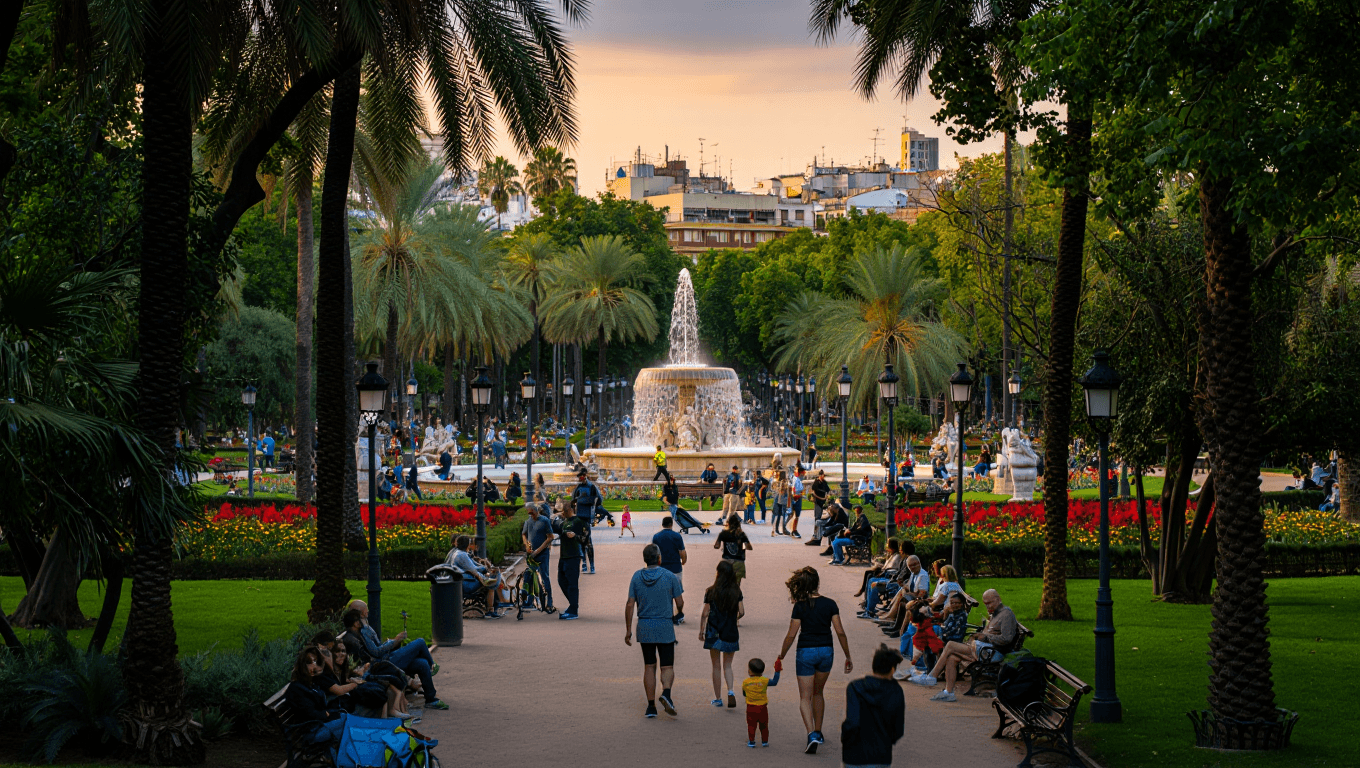
Valencia’s public spaces shape daily life: wide skies, terraces and beachfronts draw locals outdoors and make the city a living laboratory for urban nature. As interest in open-air recreation and conservation grows, Valencia’s parks, beaches and wetlands offer both everyday leisure and tangible lessons in restoration and biodiversity.
Jardín del Turia
The former riverbed of the Río Turia now forms a 5.6-mile continuous park that cuts through the city — **Spain’s largest urban greenway**. Planted with citrus trees, lawns and native shrubs, this ribbon of green links cultural venues, playgrounds and sports facilities while accommodating joggers, cyclists and outdoor classes.
Parts of the park are deliberately untended to boost wildlife habitat; elsewhere, palm-shaded paths host yoga sessions and weekend markets. From here you can walk to the Palau de la Música and the futuristic complex of the Ciudad de las Artes y las Ciencias.
Valencia’s city beaches
Beaches such as El Cabañal and La Malvarrosa sit close to lively neighborhoods where tiled houses and local markets meet the sand. The shoreline supports a full range of water activities — from paddleboarding to catamaran sails — and remains a favorite for people-watching and informal sport.
For quieter stretches, head a little farther: El Saler and nearby shores feel remote despite being under 7 miles from the centre, while La Devesa offers a deliberately undeveloped coastline as part of a small-scale rewilding success story.
La Devesa and the Albufera
La Devesa’s dunes were spared a large-scale development and have since been restored with native shrubs and pine stands. Access is limited to footpaths, which helps keep the beach peaceful and ecologically intact — there are no bars or facilities, so come prepared.
Close by, the **Albufera Natural Park** — a freshwater lagoon surrounded by rice paddies — is central to the region’s culinary and ecological identity. Boat trips on the lagoon remain the best way to see migratory birds and the wetland landscape; paella restaurants around the park serve the rice dishes that made the area famous.
| Place | What to expect | Practical tip |
|---|---|---|
| Jardín del Turia | Long green corridor, running and cycling routes, cultural venues nearby | Bring water and comfortable shoes; many entrances across the city |
| El Cabañal / La Malvarrosa | Popular urban beaches, market culture, casual beach sports | Visit the local market before the beach for fresh fruit and snacks |
| La Devesa / Albufera | Protected dunes, quiet sands, lagoon boat rides and birdwatching | Take public transport to Embarcador de l’Albufera and walk the pine track |
| Jardín Botánico | Historic botanical collections, glasshouses and conservation projects | Check the garden’s schedule for guided tours or evening openings |
| Bioparc & Oceanogràfic | Immersive zoo habitats and Spain’s largest aquarium, educational displays | Plan for several hours; both sites are at the eastern end of the Turia park |
| Parque Central | Recent urban park with native planting, fountains and picnic spaces | Combine a visit with nearby Ruzafa market for a relaxed afternoon |
Smaller green refuges and civic squares
Hidden pockets like the Jardín Botánico provide a quieter, more reflective counterpoint to busy promenades. Restored in the early 2000s, the garden supports research and conservation projects and remains a calm place for morning walks.
Meanwhile, historic plazas such as the Plaza de la Virgen are still focal points for social life. Ancient fountains and cathedral facades anchor gatherings under the Mediterranean sky — a reminder that Valencia’s public realm blends nature, history and daily routine.
Bioparc and Oceanogràfic: nature, up close
Bioparc rejects visible barriers in favor of recreated ecosystems: savannahs, wetlands and forest enclosures let visitors observe animals in settings designed to mimic their homes. Oceanogràfic, part of the Ciudad de las Artes y las Ciencias, showcases marine environments from polar to tropical and includes a shark tunnel and large ocean tanks.
Both institutions emphasize conservation and education, making them good options for families and for anyone wanting to learn more about species and habitats while staying close to the city.
Why this matters now: cities across Europe are expanding green infrastructure and Valencia is a clear example of how urban design, conservation and public life can coexist. For visitors and residents alike, the city’s parks and shores offer accessible nature, active recreation and a front-row view of ongoing restoration efforts.
Similar Posts
- Discover Gothenburg’s Eco-Friendly Secrets: Plan Your Green Weekend Getaway!
- Top 8 Eco-Friendly Destinations: Where Sustainability Takes Center Stage!
- Nicaragua beaches: 7 must-see shores for sun and surf
- Top 10 Eco-Friendly Family Destinations: Plan Your Next Sustainable Getaway!
- Explore Yellowstone Sustainably: Your Ultimate Guide to Eco-Friendly Travel

A globe-trotter and international trade enthusiast, Oliver explores the connection between business travel and trade opportunities.

