
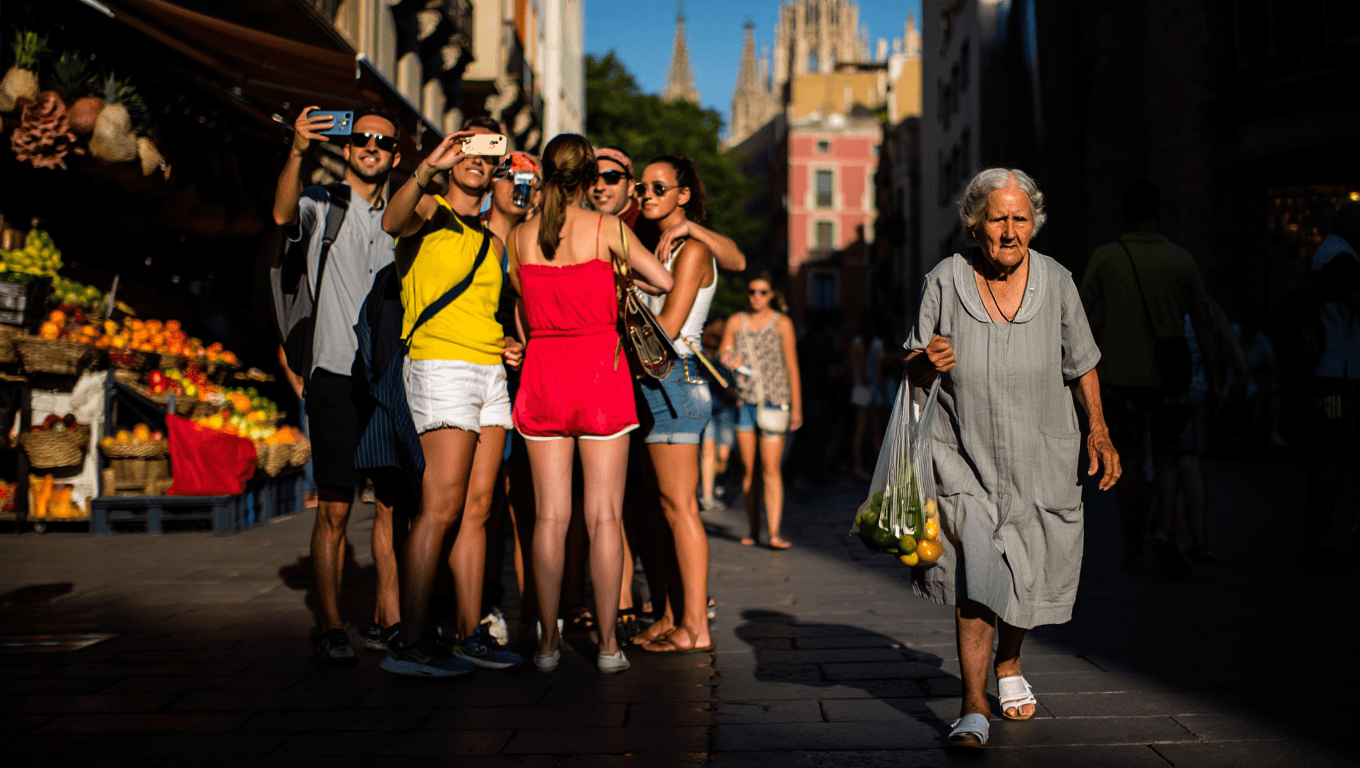
Barcelona’s streets and markets are a study in contrasts: cultural riches and everyday life sit beside the pressures of mass tourism. What once served local neighborhoods is increasingly shaped by millions of annual visitors, and the choices made now will determine whether the city remains livable for residents while welcoming for travelers.
A stroll through Mercat de la Boqueria illustrates the tension vividly. Centuries of market trade meet an influx of visitors who come for quick snacks and photos; the market now records roughly 23 million visits a year. Long-standing stalls have been forced to change or close, and many residents avoid the busiest hours. Still, some Barcelonans — including well-known local chefs — shop early in the morning, when the market still feels like a neighborhood place.
How Barcelona reached this point
Two decades of infrastructure, international events and cheaper air travel transformed Barcelona into a global destination. The 1992 Olympics opened the city to the world and reshaped its coastline; low-cost carriers later made short trips more feasible. Visitor numbers climbed from about 1.7 million in 1990 to roughly 15.6 million by 2024, in a city whose resident population is about 1.7 million. Tourism now supports an estimated 150,000 jobs and represents some 14% of local GDP.
Those figures help explain the public unease. Protests against overtourism have made headlines, and short-term lets are frequently cited as a major factor in rising rents and the displacement of long-term residents. The situation has intensified in compact historic areas, where narrow streets and popular sights concentrate crowds.
Places feeling the strain
Several neighborhoods are under particular pressure. The Barri Gòtic’s medieval alleys and the area around La Sagrada Família draw heavy footfall; the basilica and its neighborhood see millions of visits a year despite housing only tens of thousands of permanent residents. Formerly offbeat viewpoints such as Bunkers del Carmel now attract large groups, prompting local authorities to restrict access outside daylight hours after complaints about parties and late-night disruption.
Even the shoreline has changed: beaches that were once more local are now among the city’s busiest public spaces, and queues at restaurants and bars are common during peak months.
Policy moves and on-the-ground measures
City and regional leaders have begun to respond with a mix of regulation and crowd-management tools. Key measures include:
- Plans announced by mayor Jaume Collboni to phase out short-term private rentals by late 2028, targeting the removal of many listings from the market.
- A national and regional clampdown on unlicensed rental platforms, alongside a long-standing ban on new hotel construction within the city limits.
- A tourism tax, expanded in mid-2025, that adds between €6.60 and €12.10 per visitor per night to accommodation bills.
- Operational tactics such as sensors to monitor foot traffic on La Rambla, limits on guided-group sizes in the historic center, and creation of superilles (traffic-free superblocks) to prioritize pedestrians and cyclists.
- Relocation of the bulk of cruise-ship docking away from the city center in late 2023 — though around 800 cruise calls still bring about 1.6 million visitors annually.
| Metric | Latest figure |
|---|---|
| Annual visitors to Barcelona (2024) | ~15.6 million |
| Resident population | ~1.7 million |
| Mercat de la Boqueria visits | ~23 million/year |
| People employed by tourism | ~150,000 |
| Sagrada Família visitors | ~4.7 million/year to the basilica area |
| Cruise ship calls | ~800 ships bringing ~1.6 million visitors |
| Licensed private rentals | ~10,000 in the city |
Practical steps visitors can take
Individual choices add up. Travelers who change when, where and how they visit can reduce local pressure while enjoying a richer experience.
- Time your visit: Travel in spring or autumn, or explore early mornings and late afternoons to avoid peak crowds.
- Extend your stay: Longer trips encourage deeper exploration of neighborhoods beyond the tourist core.
- Choose lodging carefully: Prefer hotels, family-run pensions or licensed rentals to avoid contributing to local housing displacement.
- Use public transport and rail: Arrive by train when possible and rely on Barcelona’s metro, buses and bike lanes rather than private cars.
- Support local businesses: Buy from neighborhood markets and artisan shops, and book restaurants that serve residents as well as visitors.
- Pick responsible tours: Seek guides and companies that employ locals and channel revenue into the community.
- Learn a few words: Basic Catalan greetings are appreciated and signal respect for local culture.
There are meaningful options for travelers who want to help rather than harm. Social enterprises and neighborhood-based guides — from food-walking companies that promote independent stalls to groups offering architecture-focused walks — connect visitors with less-explored parts of the city and funnel economic benefits deeper into communities.
Barcelona’s future depends on a balance: preserving the everyday life that makes the city special while maintaining a vibrant visitor economy. For travelers, that balance starts with simple, conscious choices — when to go, where to stay and how to spend your time and money.
Similar Posts
- Bywater Battle: How Tourism is Reshaping New Orleans’ Iconic Neighborhood
- Athens overtourism: Lonely Planet maps quiet routes and crowd-beating tips
- Mallorca Urges Tourists: Commit to Protecting Our Island’s Stunning Beauty
- Venice access fee 2026: who pays, how much and how it affects your trip
- Vienna tourists: simple steps to protect the city while traveling now

A globe-trotter and international trade enthusiast, Oliver explores the connection between business travel and trade opportunities.

