
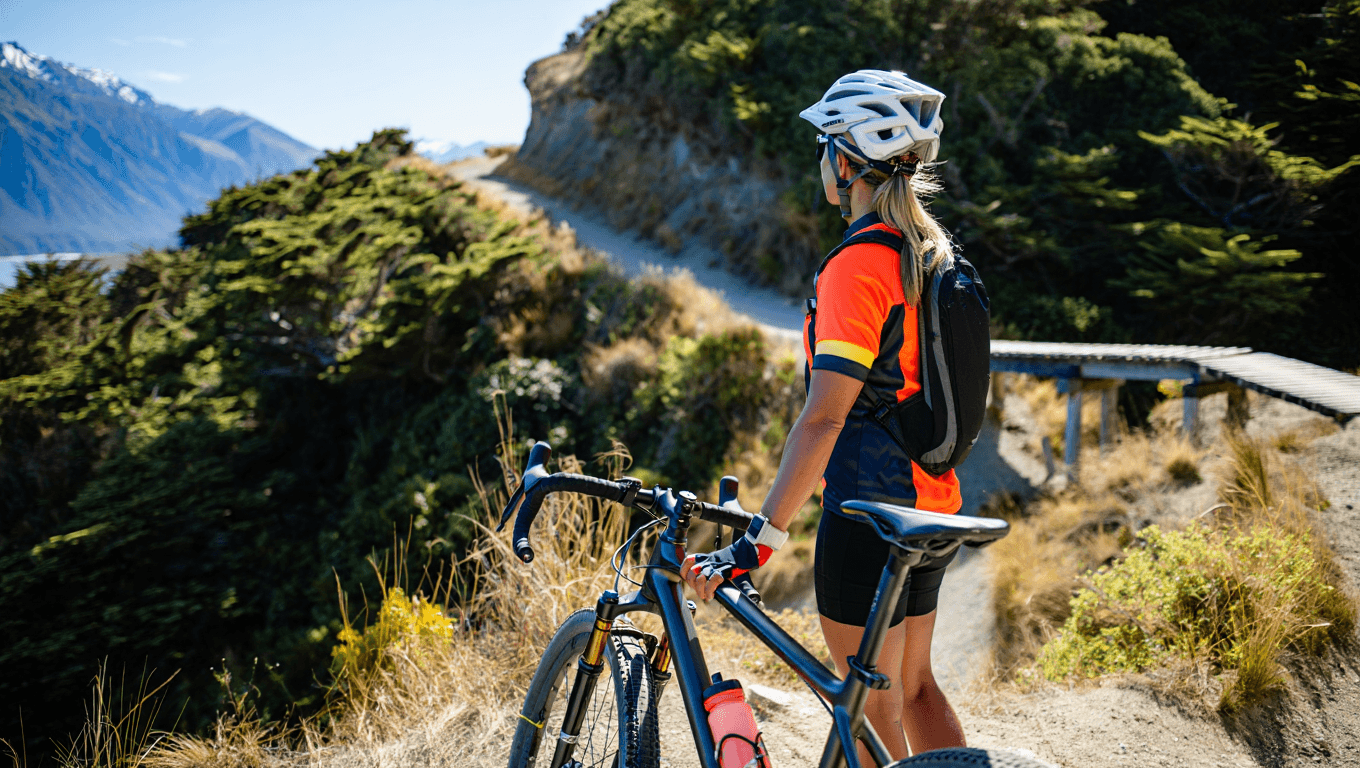
New infrastructure and recent trail openings are making New Zealand an even stronger draw for bikepackers in 2025 — whether you’re planning a weekend escape or a month-long traverse. Recent government funding and new trail links are expanding options for riders of all abilities and changing how people get to and move around the country.
Getting your bike into and around New Zealand
Most international flights touch down in Auckland; expect only basic bike storage there. Christchurch and Queenstown airports now offer assembly stations near arrivals, which can save time after a long flight. Wellington and Dunedin do not have dedicated bike assembly facilities, though both have regular international connections to Australia.
Airlines — domestic and international — require bikes to be partly dismantled and packed in a bike box or bag. Confirm airline size and weight limits before you travel, and be ready to remove all visible soil: New Zealand enforces strict biosecurity checks, so clean tires and frames are essential.
I often pick up a free bike box from a local shop or buy one at the airport if needed. On intercity buses and trains, rules vary: many buses will accept folded or boxed bikes for an extra fee, while trains usually permit bikes if panniers are removed. Space is limited on public transport, so call ahead when possible.
When to go
The warm season from October through April offers the most reliable riding conditions, but microclimates matter — the farther south you go, the quicker conditions can turn cold. December and January are high season, with school holidays making popular trails busier; late summer into early autumn (February–April) often provides quieter tracks and stable weather.
I prefer spring and autumn for bikepacking: temperatures are milder, crowds are thinner, and the landscape shows dramatic seasonal color. Whatever the month, always check forecasts and allow flexibility in your plans.
What to bring
Packing depends on remoteness and trip length, but some items are indispensable. Test gear by loading it for a long practice ride and setting up camp before committing to remote routes.
- Navigation: maps or GPS device, printed route notes
- Shelter and sleep system: lightweight tent, sleeping bag and pad
- Repair kit: pump, spare tube or tubeless repair kit, multi-tool, tire levers, spare quick link
- Clothing: layered warm clothing, waterproof jacket, extra socks
- Safety and communication: helmet, lights, reflective gear, PLB or satellite messenger
- Food, water-treatment option, basic first-aid kit
Where to camp and stay
Options range from Department of Conservation huts and designated campsites to holiday parks, hostels and hotels. Book ahead during popular periods. For lightweight, comfortable camping choose compact down sleeping bags and small inflatable pads.
Community support on long routes is a distinctive feature of New Zealand riding. Many locals open their homes or yards to passing cyclists — a practice rooted in local hospitality and environmental stewardship. Online groups for long-distance riders are useful places to request help or announce arrival times a few days in advance.
Safety essentials
Follow the New Zealand Land Safety Code: carry a registered personal locator beacon (PLB) or hire one locally, wear a properly fitted helmet, use lights and reflective clothing, and be familiar with road rules. Leave a clear trip plan with someone who’s not riding with you, and consider leaving a note in your parked vehicle with return details and an emergency contact.
Recent improvements and why they matter
In early 2025 the government announced a NZ$9 million investment to shore up and better link cycle networks across the country. That funding has already supported projects such as a new 68‑metre cycle bridge on the St James route and the opening of a 5.5‑kilometre section of the Shotover Gorge Trail in Queenstown. In June 2025 a new section of Te Hangāruru opened in the North Island — a key piece in plans to create a continuous route from Mt Ruapehu to the Tasman Sea. For riders, these upgrades mean safer crossings, more reliable connections between trails and expanded options for multiday itineraries.
Notable routes and how long they take
New Zealand has rides to match every appetite — short, scenic loops to technical backcountry tracks and epic cross‑country journeys. The national trail network categorizes routes into Great Rides, Heartland Rides and Connector Rides, with route pages that list distance, terrain and suggested durations.
| Route | Distance | Suggested days | Island |
|---|---|---|---|
| Nelson Great Taste Trail | ~200 km | 1–4 days | South |
| Otago Central Rail Trail | 152 km | 1–5 days | South |
| Alps2Ocean | 315 km | 1–5 days | South |
| Great Lake Trail (Taupō) | 88 km | 1–3 days | North |
| Forgotten World Highway | 183 km | 2–3 days | North |
For riders seeking true endurance challenges, long-distance options include the coast-to-coast Tour Aotearoa (~3,000 km) and routes like Kōpiko Aotearoa and the Kahurangi 500; these require careful logistics and contingency planning.
E-bikes, rentals and guided options
E-bikes are increasingly popular — they broaden access and make loaded legs more manageable. Many Great Rides are e-bike friendly, and investment has gone into charging infrastructure on some routes, making multiday trips more feasible for electric riders.
Major centres such as Auckland, Wellington, Christchurch and Queenstown host rental shops that offer standard bikes and e-bikes for day hires or longer. Local operators also provide guided and self-guided tours, shuttle services and bike support; some specialize in particular regions while others cover the whole country.
Practical final notes
Respect the land: pack out all rubbish, follow campsite rules and leave places as you found them. Treat local communities and land managers with courtesy — the best rides depend as much on stewardship and goodwill as on tracks and bridges.
With new trail links and targeted funding improving connectivity, New Zealand’s bikepacking scene is becoming more accessible and varied. Plan carefully, carry the right kit, and you’ll find a network that rewards planning with world-class scenery and unexpected local hospitality.
Similar Posts
- Discover New Zealand: Top 3 Scenic Train Rides You Can’t Miss!
- Paris cycling routes: five epic French tours leaving the capital this weekend
- Alpina Mediterranean cycle route debuts: what cyclists must know before booking
- Pekoe Trail Sri Lanka: what hikers need to know now
- Explore Wales: Discover Epic Scenery While Traveling

A globe-trotter and international trade enthusiast, Oliver explores the connection between business travel and trade opportunities.

