
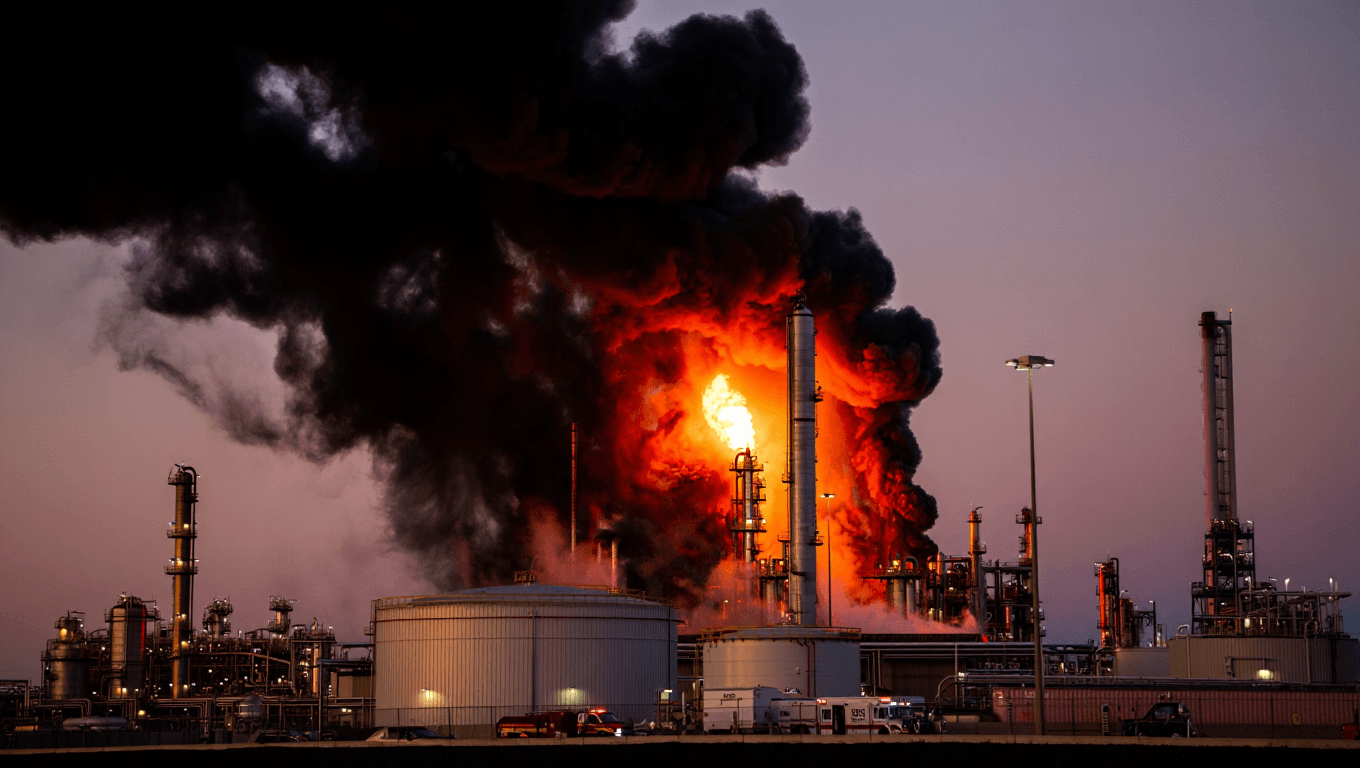
A fire this week at a Valero refinery in Texas has added fresh strain to an already tight fuel market, raising questions about regional supply, shipment schedules and near-term price volatility for motorists and businesses. The incident cuts into refining output at a moment when inventories are lean, and traders are watching for how long the facility will be offline.
Refinery outages reduce the flow of finished products—most immediately gasoline and diesel—into distribution networks. Even a short interruption can force suppliers to reroute shipments from other plants, increase reliance on imports, or pull from already limited stockpiles, which in turn can push wholesale prices higher and feed through to pump prices within days or weeks.
Market implications at a glance:
- Immediate supply pressure: Local markets may face tighter availability as regional terminals rebalance deliveries.
- Price sensitivity: Futures and wholesale margins often react quickly to refinery disruptions, particularly if the outage overlaps with peak demand periods.
- Logistics ripple effects: Trucking schedules, pipeline allocations and export cargoes can be reshuffled, adding short-term friction to distribution.
- Uncertainty window: The length of the shutdown is the main variable; longer repairs or regulatory inspections deepen the market impact.
For consumers, the most tangible effect would likely be upward pressure on pump prices in the affected region, though national impacts depend on the outage’s duration and whether nearby refineries can pick up the slack. Commercial fuel buyers and fleets may face higher short-term costs and altered delivery timetables.
Analysts point out several factors that determine how acute the disruption becomes: the refinery’s share of local output, inventories at nearby terminals, seasonal demand trends and available spare capacity in other U.S. refineries. Historically, short outages are often smoothed by internal market adjustments; prolonged closures or coinciding disruptions—such as other simultaneous outages or extreme weather—are what tend to drive larger price moves.
Broader context and what to watch next:
- Official updates on the cause of the blaze and expected restart timeline.
- Inventory data from regional terminals and federal weekly stock reports.
- Refinery utilization rates and any announced maintenance that could limit spare capacity.
- Movement in gasoline and diesel futures as traders price in the outage.
Beyond immediate supply and price effects, refinery fires bring operational and regulatory follow-up: investigations into safety and environmental impacts, potential inspections of similar facilities, and decisions about repairs that can extend downtime. For communities close to the plant, there can also be public health or traffic consequences while emergency response and cleanup continue.
This episode underscores a fundamental vulnerability of the fuel system: a small number of large facilities handle a disproportionate share of refining output, so incidents at a single site can have outsized short-term effects. Energy market participants and policymakers will be tracking replacements for lost volumes and signals that indicate whether this is a temporary blip or a disruption with longer-term market consequences.
Similar Posts
- Diesel price jumps to seasonal record: drivers face bigger fuel bills
- Diesel futures soar as storm halts refinery operations across the US
- Fuel prices surge: drivers face higher costs as stations lack pricing power
- Oil prices set to surge as war deepens: IEA warns
- Jones Act waiver could slash surging fuel prices: potential relief for drivers

A logistics expert, Ethan shares tips to optimize supply chains and reduce freight costs in global trade.

