
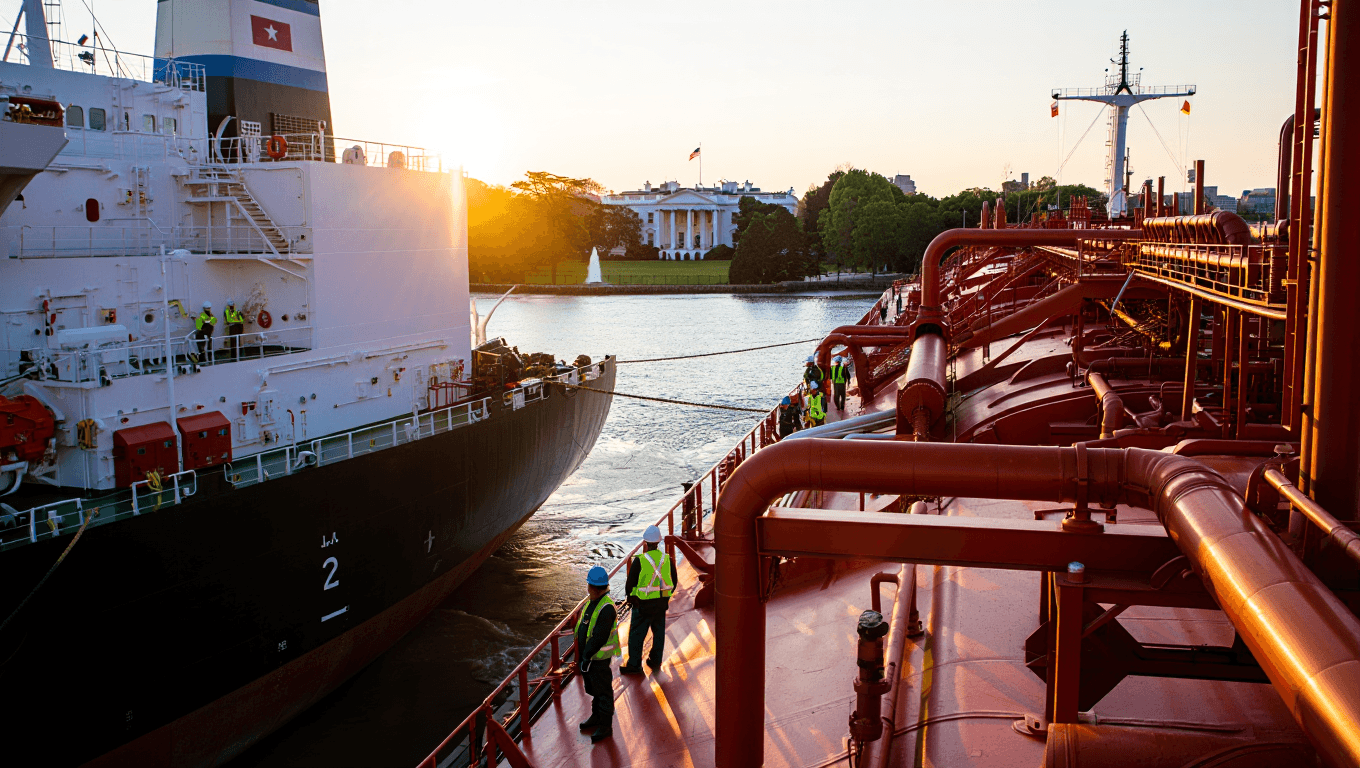
The White House announced a 90‑day extension of a temporary waiver to the Jones Act aimed at easing a short‑term fuel shortage, allowing foreign tankers to move gasoline and diesel between U.S. ports. The move is designed to speed deliveries and relieve pressure on regional supplies, but it also reignites debates over maritime policy and long‑term energy resilience.
What the waiver changes — and what it doesn’t
The Jones Act normally requires vessels transporting goods between U.S. ports to be built, owned and operated by Americans. By extending the waiver for 90 days, the administration permits non‑U.S.‑flagged tankers to carry fuels on domestic routes that would otherwise be restricted.
This is a limited, emergency measure. It does not alter the law itself and is intended to be temporary while officials address the underlying supply disruption.
Why officials acted now
Federal leaders cited immediate supply strains in certain regions and a risk of localized price spikes at the pump. Allowing foreign tankers to fill shortfalls can move product faster than waiting for domestic vessels to reposition, which officials say should blunt the most acute shortages.
For consumers, the main effect could be steadier regional availability and less abrupt price volatility. For the logistics chain, it reduces bottlenecks and shortens the time needed to replenish inventories.
- Short-term relief: Faster transfers of fuel between ports.
- Monitoring: Agencies will track shipments and market impacts during the 90‑day window.
- Temporary scope: The waiver does not change shipbuilding or crewing requirements beyond the period granted.
Market and political implications
Energy markets often respond quickly to moves that affect supply flow. Traders and refiners will watch inventory reports and regional price data for signs that the waiver is easing tightness.
Politically, the decision walks a fine line. Supporters argue it is a pragmatic response to immediate needs; critics — including some maritime unions and domestic shipbuilding interests — warn that frequent or prolonged waivers undermine American maritime jobs and industry competitiveness.
Legal and operational limits
Waivers are typically issued in narrowly defined circumstances: when national security or public welfare concerns justify an exception. They require oversight to ensure compliance with safety and environmental rules during cross‑border movements.
Operators using the waiver remain subject to federal regulations governing vessel safety, crew qualifications and fuel handling. The Department of Transportation and related agencies will review outcomes before deciding whether further relief is warranted.
What to watch over the next 90 days
- Regional fuel inventories and weekly Energy Information Administration (EIA) reports.
- Retail gasoline and diesel price trends in affected states.
- Statements from maritime unions, coastal governors and Congress about extending or ending the waiver.
- Any logistical constraints that persist despite the temporary relaxation of shipping rules.
The extension is a short‑term fix intended to smooth immediate disruptions. Its ultimate success will hinge on how quickly fuel flows stabilize and whether policymakers can reconcile emergency relief with longer‑term goals for the U.S. shipping industry and energy infrastructure. Expect close scrutiny from markets and lawmakers as the 90‑day clock runs down.
Similar Posts
- Jones Act waiver could slash surging fuel prices: potential relief for drivers
- Fuel price swings hit global freight: Iran tensions push shipping costs higher
- Oil prices slip as fresh diplomacy raises odds of Iran ceasefire
- Oil prices climb after Iran conflict intensifies: markets shrug off Trump’s denials
- Oil near $100: Iran threatens prolonged closure of the Strait of Hormuz

A logistics expert, Ethan shares tips to optimize supply chains and reduce freight costs in global trade.

