
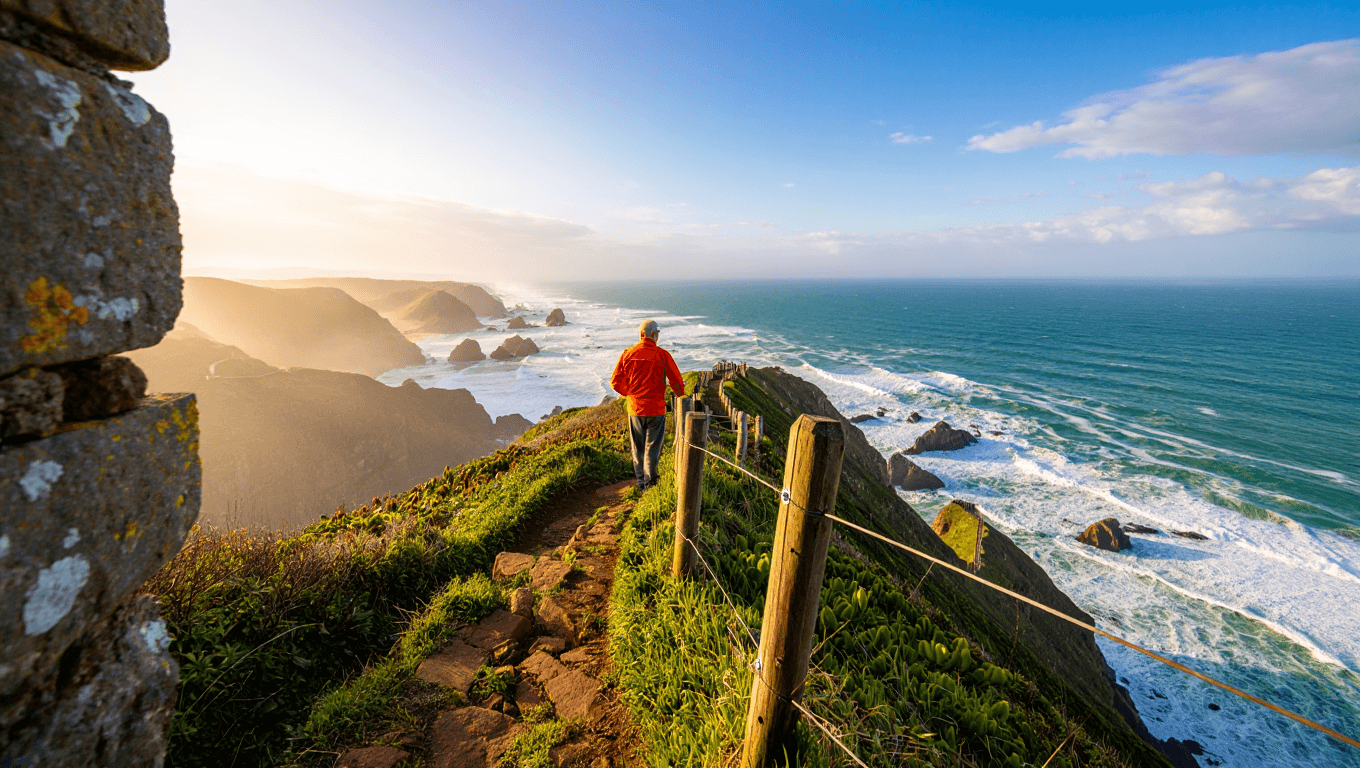
Stretching along Portugal’s southwest shore, the Fishermen’s Trail—part of the Rota Vicentina—packs rugged cliffs, isolated beaches and centuries of coastal life into 226km of walking. Its value today is practical and immediate: seasonal windows make the route more comfortable to hike, while rising visitor interest has sharpened conversations about protecting a delicate maritime landscape.
| Quick facts | Details |
|---|---|
| Endpoints | São Torpes (Alentejo) and Lagos (Algarve), hikeable in either direction |
| Length | 226 km |
| Typical itinerary | 13 stages, usually one day each (up to ~22.5 km/day) |
| Terrain | Sandy coastal tracks, cliff-tops, some steep sections |
| Difficulty | Moderate to challenging |
| Best season | Open September–June; spring and autumn most comfortable |
Why the Fishermen’s Trail matters now
The route traces historic fisher paths and small coastal communities where fishing still shapes daily life. As outdoor travel rebounds, the trail combines recreation with a conservation challenge: more visitors make planning and responsible behaviour essential for protecting dunes, seabird colonies and fragile flora.
First impressions: from industry to empty shore
The northern approach near Sines provides an abrupt contrast: heavy industry gives way quickly to wild coastline. From São Torpes the landscape opens into long, exposed tracks, with the Atlantic visible at nearly every step. For many walkers this immediate change — from port skyline to unbroken sea — defines the trail.
Springtime colors the route: wildflowers and aromatic scrub line the paths, and the soundscape is mostly wind and waves. That quiet is part of the trail’s appeal; it also slows pace and encourages more thoughtful travel.
The villages and the shortcuts between stages
Small towns break the solitude. Porto Covo’s whitewashed houses and Vila Nova de Milfontes’ river mouth provide natural stopping points with places to eat and sleep. At Milfontes, a short boat crossing across the Mira river is commonly used to skip kilometres and reach the next stage more quickly.
Further south, coastal communities such as Zambujeira do Mar, Odeceixe and Aljezur punctuate the route, each offering distinct architecture, beaches and local services. In the Algarve section the landscape changes again: higher cliffs, old fortifications and, in some villages, the characteristic chimneys of southern Portuguese houses.
Notable features along the route
The trail visits two prominent capes: Cape Sardão and Cape São Vicente. Both are dominated by lighthouses, but their atmospheres differ. Cape Sardão remains quiet and wild, where storks nest on cliff tops; Cape São Vicente, near Sagres, is a busier tourist magnet with visitors, vendors and parking areas.
Archaeological traces — like the remains of medieval Islamic settlements used for coastal observation — remind walkers that this shoreline has been a working landscape for centuries. Small fishing harbours still operate, and in places the route threads past rocky coves where local fisheries continue.
How long to allow
The standard plan divides the trail into 13 daily stages, but many hikers advise adding extra days to rest, explore villages, or detour to nearby beaches. Those who rush the itinerary risk missing the quieter moments that make the route memorable.
Practical planning and safety
- When to go: Walk between September and June to avoid summer heat; spring and autumn offer milder temperatures.
- Start points: São Torpes for a north→south walk; Lagos if you prefer south→north. The trail is waymarked in both directions.
- Accommodation: Guesthouses and small hotels are available in most villages; campsites exist at a handful of locations (wild camping is prohibited).
- Navigation and water: Follow signposts, carry a reliable map or GPS and always bring extra water — there are long exposed stretches with limited refill options.
- Environment: Stay on the paths, avoid disturbing nesting birds and remove any litter. The coastline is a protected area; responsible travel keeps it that way.
Packing essentials
- Sturdy boots or trail shoes suitable for sand and uneven rock
- Layered clothing for variable coastal weather; lightweight rain protection
- Walking poles for stability on dunes and steep sections
- Sunscreen, hat and ample water (aim for bottles or a hydration bladder)
- Lightweight daypack—keep load under about 20% of your body weight
Logistics are straightforward but require thought: trains and buses connect larger points such as Sines and Lagos, while local taxis or scheduled services can move luggage between stages if you prefer lighter-day hikes. Food is available along the route, but remote stretches mean you should top up supplies before longer days.
The Fishermen’s Trail rewards planning and patience. Its combination of open sea, historic coastline and quiet villages offers more than a physical challenge: it’s a chance to witness a working shore and, if visitors act carefully, to help preserve it for future walkers.
Similar Posts
- Michinoku Coastal Trail in Japan surges in popularity: what hikers should know
- Samaria Gorge hike: updated tips and essential rules for Crete visitors
- North Coast 500: locals urge responsible travel as tourism soars
- Pekoe Trail Sri Lanka: what hikers need to know now
- Explore Slovenia’s New Green Route: A Dream for Independent Travelers

A globe-trotter and international trade enthusiast, Oliver explores the connection between business travel and trade opportunities.

