
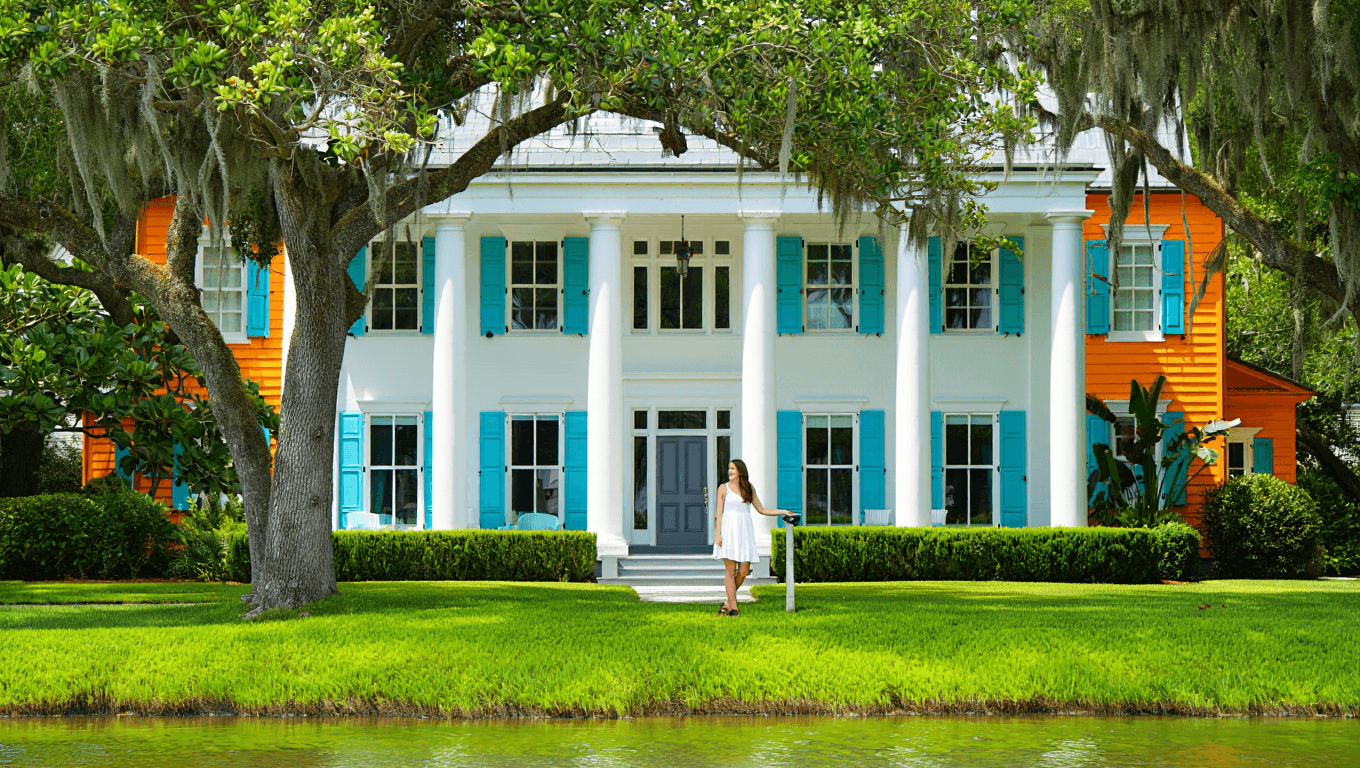
When Janie Molster toured a stately Southern Colonial on the banks of Wappoo Creek, she felt an unexpected connection: the property stood on land tied to a friend’s childhood memories. Tasked with transforming the house into a lively, lived-in family home, Molster set out to blend the site’s historic bones with bold, modern color and vintage references.
A contemporary layer on a historic footprint
The brief was clear: retain the house’s architectural character while giving interiors a fresh, energetic personality. Molster and her colleague Robyn Framme leaned into contrasts—pairing formal moldings and wide-plank floors with saturated hues, graphic tile, and furniture cues from the 1970s.
This approach created rooms that read as both familiar and surprising. Instead of assembling a period tableau, the design favors curated juxtaposition: faded French antiques sit alongside graphic marble floors and a retro saffron settee, producing a sense of depth and personality rather than a museum-like display.
- Designer: Janie Molster
- Location: Charleston, South Carolina
- Home size: Approximately 7,200 sq ft with five bedrooms and six bathrooms
- Design drivers: Color-forward palette, custom textiles, family-focused functionality
Rooms and defining details
Living room: A custom hand-tied rug—its palette of marigold, fuchsia and marine blue—set the tone for the entire house, anchoring multiple seating areas. The fireplace wall displays commissioned paintings that add both color and a local artist’s voice to the composition.
Family room: Placed next to the kitchen, this casual room relies on layered sheers to soften daylight and a 1970s abstract to energize the space. A Moroccan carpet and comfortable, durable upholstery make it a true family hub.
| Room | Key features | Style notes |
|---|---|---|
| Dining room | Floor-to-ceiling color, graphic wallpaper | Moody, jewel-toned stop within the house |
| Breakfast nook | Midcentury chairs, built-in bench with storage | Casual, family-first seating |
| Entryway | Bold patterned floor, citron sofa | High-impact first impression |
| Primary bedroom | Large windows, color-blocked sofa, global textiles | Soft peach tones with Moroccan and Turkish accents |
Custom commissions played a central role. Molster worked with artisans abroad to produce a rug sized to hold multiple seating groups, and she specified a bespoke, color-blocked sofa in the primary suite that echoes an embroidered suzani panel on the wall. Those tailored pieces help the house feel cohesive without appearing curated to the point of stiffness.
Design that lives
For Molster, functionality mattered as much as aesthetics. As a mother of five, she emphasizes durability and comfort alongside layered style. “I aim for rooms that have accumulated naturally,” she says, noting that the most welcoming interiors show evidence of life rather than perfect preservation.
That philosophy paid off in a small but meaningful moment: after the installation, the designer received a video of the client’s children cartwheeling across the living room—an unplanned validation that the house functions as intended.
Why this matters now
Homes that merge historic frameworks with contemporary, personal interiors are increasingly visible in design conversations. This Charleston project exemplifies several current trends: a preference for bespoke textiles, mixing high and low antiques, and prioritizing family-friendly plans that still read as stylish.
- Takeaway: Mixing eras—especially adding midcentury or 1970s references—can refresh a traditional house without erasing its character.
- Practical tip: Invest in one or two custom pieces to anchor a room and make eclectic groupings feel deliberate.
- Broader impact: Designers and homeowners are balancing preservation with personalization, showing that historical homes can be both authentic and contemporary.
Molster’s work on Wappoo Creek is less about nostalgia and more about translating memory into modern livability. The result is a house that reads as both rooted and current—an instructive example for anyone looking to update a historic home with heart and practicality.
Similar Posts
- Historic 1920s kitchen refreshed without demolition: budget-friendly tweaks deliver big impact
- Custom-Made Wonderland: Discover How Every Piece in This Home is Uniquely Crafted!
- Notting Hill’s Most Joyful Home: Discover K&H Design’s Vibrant London Apartment!
- Ladue Tudor Estate: Discover the Charm of Eclectic Elegance in a Historic Gem
- Los Angeles Home Shines with 70s Glam: Discover the Stunning Sunken Bar!

A champion of quality and authenticity, Emily delves into Australian-made products and their impact on global markets. With a focus on sustainability, she helps readers understand why these goods are leading the trade world.

