
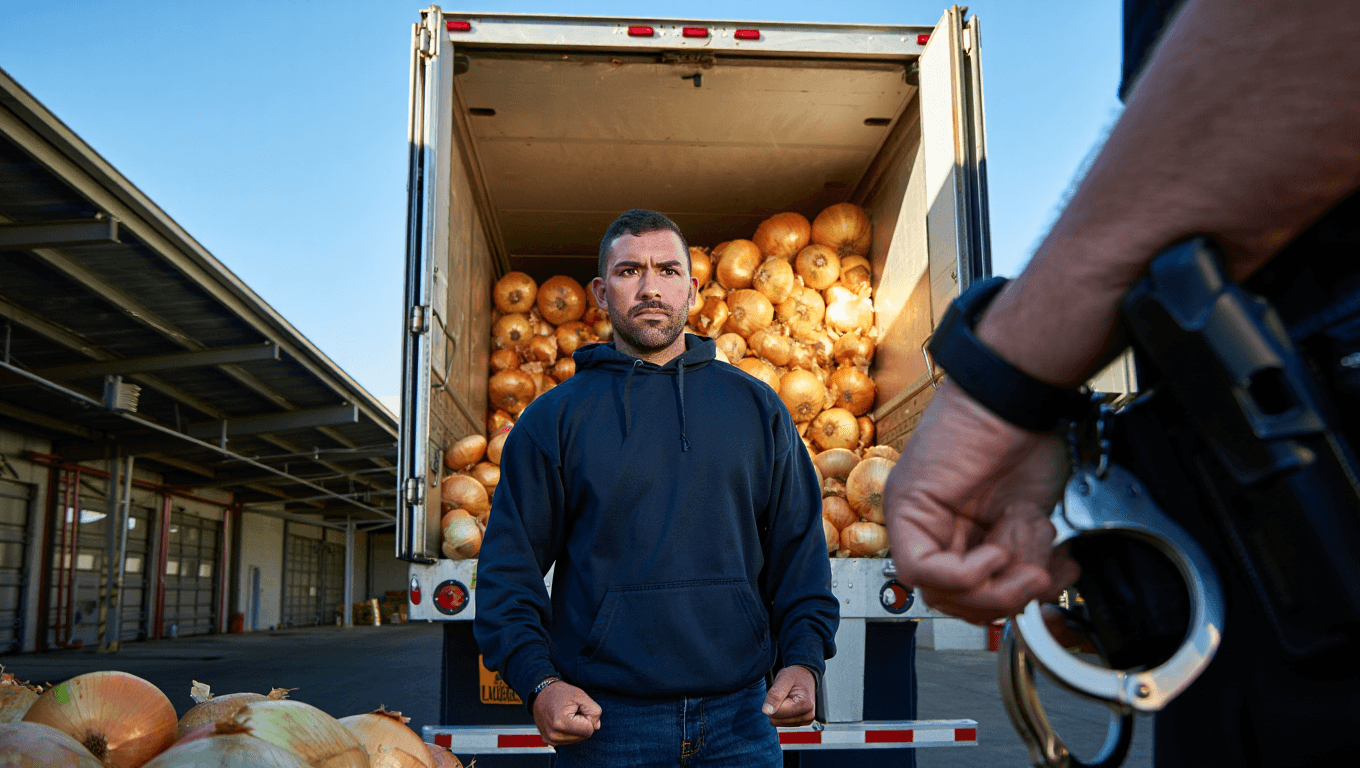
A Florida resident has been indicted by federal prosecutors this week on charges tied to the theft of commercial onion shipments, a development authorities say highlights growing pressure on the produce supply chain. The case, now pending in federal court, signals sharper enforcement of cargo theft and poses immediate consequences for wholesalers, retailers and consumers.
Allegations and legal claims
Federal filings allege the defendant took part in a scheme to divert one or more truckloads of onions that were in transit for commercial sale. Prosecutors characterize the conduct as theft of goods moving in interstate commerce and say the matter crossed state and federal jurisdictions.
Local and federal investigators worked together to trace the missing cargo to storage and resale points, according to law enforcement statements. The indictment accuses the defendant of conspiring with others to misappropriate shipments and then attempt resale through unofficial channels.
- Charges named in the indictment: conspiracy, theft of interstate goods and possession of stolen property (as alleged by prosecutors).
- Potential consequences: federal prosecution can result in fines, prison time, and court-ordered restitution if convicted.
- Law enforcement partners: the case involves coordination between federal agencies and local police to investigate cargo diversion and resale networks.
Why this matters now
For grocery stores, wholesalers and consumers, cargo theft is not just a law-enforcement issue: it affects supply reliability and prices. When shipments of high-volume produce like onions are lost or delayed, retailers may face immediate inventory gaps and higher replacement costs that can trickle down to shoppers.
Insurance premiums and security measures for trucking and warehousing operations can also rise after such incidents, adding recurring costs across the distribution chain. Small farms and regional distributors — often operating on thin margins — can bear the brunt if stolen loads reduce expected revenue.
What to expect next in the case
The defendant is scheduled for an arraignment in federal court, where the charges will be formally read and the court will consider pretrial conditions. Prosecutors may move for asset seizure or restitution claims tied to the value of the stolen cargo.
Possible developments to watch:
- Pretrial motions and any requests for detention or release.
- Whether additional defendants are charged as the investigation continues.
- Settlement or plea talks versus a trial to resolve the indictment.
- Industry responses such as tightened logistics controls or new anti-theft measures.
Broader implications
This prosecution is part of a wider effort to curb organized theft targeting commercial shipments, especially agricultural goods that are easy to move and resell. Federal authorities emphasize that stronger penalties and interagency cooperation are needed to deter theft rings that disrupt markets and harm producers.
As the case proceeds, the facts laid out by prosecutors will determine whether the charges lead to conviction. The defendant remains presumed innocent until proven guilty in court.
Similar Posts
- Cargo theft crisis drives Sen. Young to push for stronger SAFER Transport Act reforms
- Cargo theft bill clears key hurdle: moves closer to tougher penalties
- Multistate diesel theft rings dismantled by authorities: major crackdown on fuel crime
- ICE raid at Pennsylvania CDL office: 13 foreign truck drivers held
- Louisiana lawyers convicted in staged crash fraud

A logistics expert, Ethan shares tips to optimize supply chains and reduce freight costs in global trade.

