
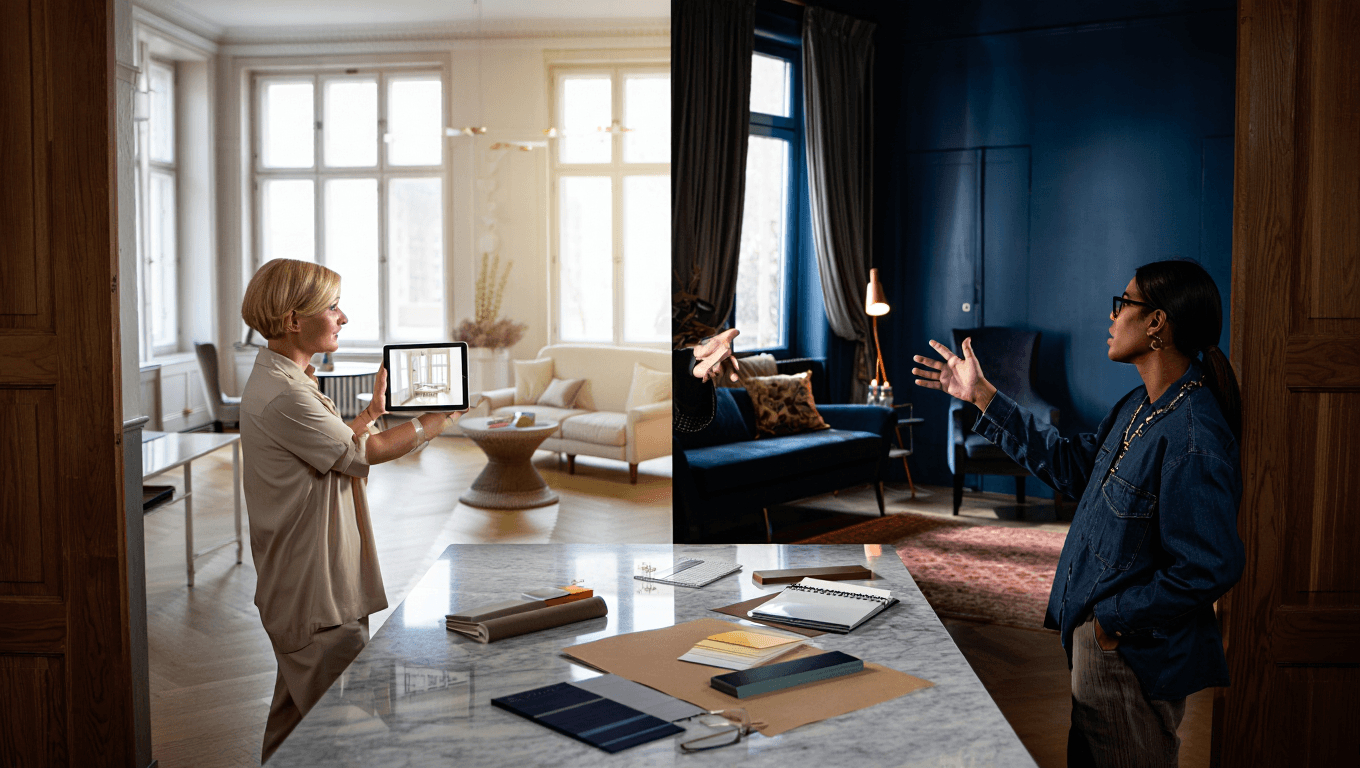
Interior designers are increasingly revisiting a long-running debate: should rooms be kept bright and airy, or pulled into deeper, moodier tones? As lighting technology, sustainability concerns and wellbeing research evolve in 2026, that choice has practical consequences for comfort, energy use and property value.
Why the question matters now
Advances in adjustable LED systems and growing attention to circadian lighting have shifted the stakes. A room’s palette no longer determines just aesthetics; it interacts with light control, occupant health and energy bills in measurable ways. For homeowners and professionals alike, the decision about dark vs. light finishes is increasingly technical as well as visual.
Two distinct design directions
Among today’s projects two main approaches are visible. One favors pale surfaces and high-reflectance finishes to amplify daylight and create a sense of openness. The other embraces saturated shades and deep tones to produce intimacy, richness and visual focus.
Both directions can succeed if they respond to the room’s role, the building’s orientation, and the available lighting strategy. What changes is how designers think about balance: where earlier practices prioritized either look, now they integrate material choice with light control and function.
Practical trade-offs
Choosing between a light or dark scheme comes down to trade-offs that affect everyday use:
- Function: Task-heavy spaces (kitchens, home offices) often benefit from brighter surfaces that improve visibility. Lounges and bedrooms tolerate deeper tones that promote relaxation.
- Scale: Light colors can visually expand a compact room; dark palettes can anchor very large spaces and reduce perceived emptiness.
- Maintenance: Dark finishes mask some stains but reveal dust and scratches differently than light surfaces.
- Energy and daylight: Reflective, light surfaces reduce the need for artificial lighting during daytime—but modern dimmable LEDs and smart controls can offset that advantage.
- Resale and broad appeal: Light, neutral schemes still have the widest market acceptance, while bold dark looks can attract buyers seeking distinctive style.
Design techniques that reconcile both
Instead of choosing one side outright, many professionals now mix elements to capture the benefits of each. Layering is a favored tactic: lighter walls with a dark accent wall, or pale floors paired with deep-colored textiles to add depth without overwhelming daylight.
Other methods include using high-CRI LEDs and tunable white fixtures to mimic daylight cycles, and increasing surface reflectance strategically (mirrors, gloss finishes) where extra brightness is needed.
| Consideration | When to favor light | When to favor dark |
|---|---|---|
| Natural light availability | Small windows, northern exposures | Abundant sunlight or controlled lighting |
| Room function | Workspaces, kitchens, bathrooms | Bedrooms, media rooms, intimate dining |
| Desired mood | Airy, uplifting, neutral backdrop | Cozy, dramatic, cinematic |
| Resale flexibility | Higher broad-market appeal | More niche, may limit buyer pool |
Questions to ask before committing
To choose a direction that serves both aesthetics and performance, consider these fast checks:
- How much direct sunlight does the room receive through the day?
- What is the primary use of the space, and when is it used most?
- Can lighting be dimmed or tuned to support different activities and times of day?
- Will darker finishes fit the building’s long-term value and potential buyers?
Small changes with big impact
Even modest adjustments can shift a room’s character without a full repaint. Swapping textiles, changing a rug, or introducing a dark-painted cabinet can provide the depth designers prize while leaving base surfaces light for resale flexibility and daylight performance.
Conversely, a deeply hued wall or ceiling can add drama in a way that built-in lighting emphasizes—especially now that smart controls let homeowners dial color temperature and intensity to match mood and time.
Takeaway
The dark-versus-light debate is no longer a simple stylistic preference. In 2026 it’s a choice that intersects with lighting tech, health research and market expectations. For lasting results, weigh the room’s purpose, the quality of daylight, and whether you need flexibility for future buyers. Thoughtful layering and controllable lighting let designers—and homeowners—have the best of both worlds.
Similar Posts
- Paint colors HGTV designers swear by: 12 trending shades to try now
- Interior design pivots to small, purpose-built zones: open-plan living falls out of favor in 2026
- Immersive wallpaper revolutionizes interiors: designers turn to full-room murals
- Kitchen paint colors designers swear by: 56 shades to suit every style
- Home upgrade that consistently boosts resale value and livability, experts say

A champion of quality and authenticity, Emily delves into Australian-made products and their impact on global markets. With a focus on sustainability, she helps readers understand why these goods are leading the trade world.

