
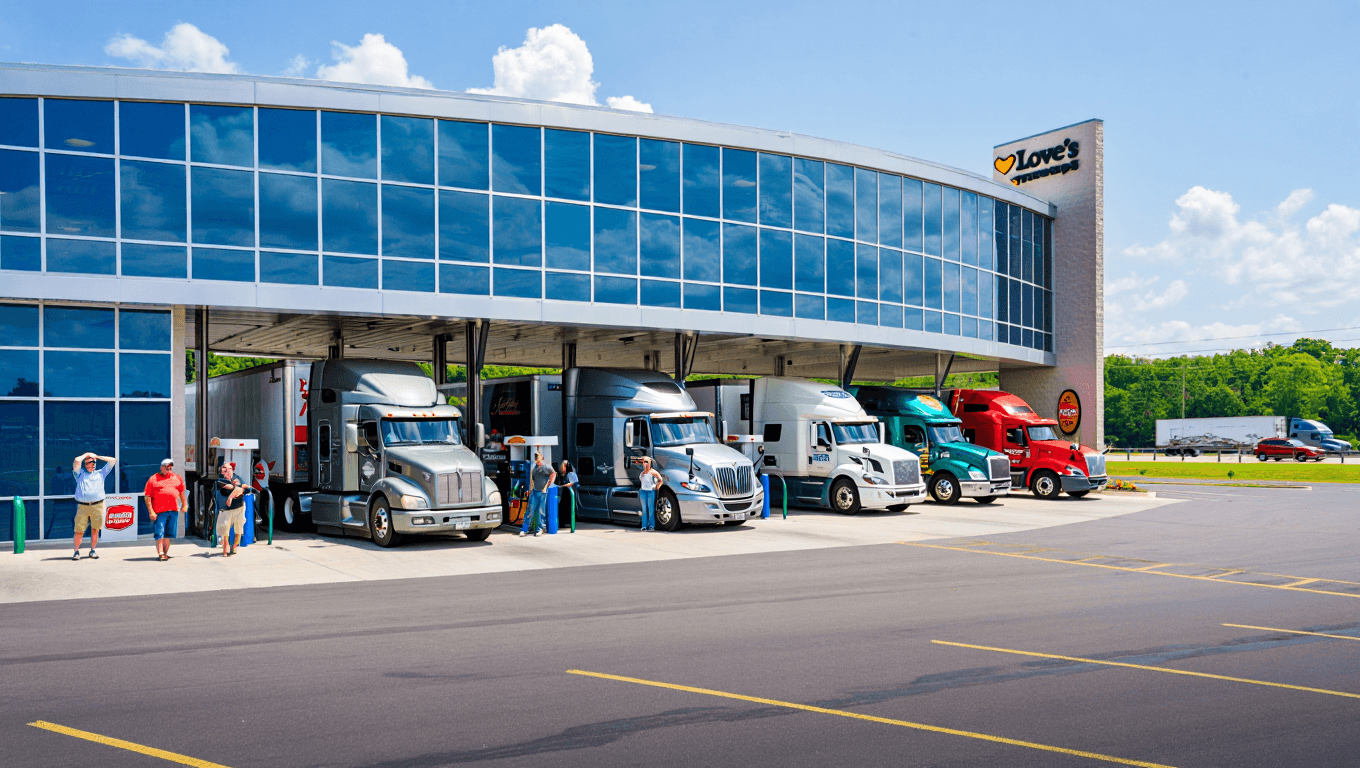
Love’s Travel Stops this month opened a new facility in Alabama, expanding the chain’s footprint in the Southeast and promising easier access to fuel and services for long-haul drivers and regional travelers. The site, positioned near a major highway corridor, aims to deliver the typical mix of diesel pumps, convenience retail and parking that truck operators and motorists increasingly expect.
The arrival matters because travel centers shape traffic patterns and local economies: they create immediate employment opportunities, change demand for nearby services, and can alter freight routing for the region. For towns along busy routes, a new travel stop often becomes a practical hub for drivers and a modest economic engine for surrounding businesses.
What drivers will find
Love’s new stop opens with a familiar lineup of services that reflect current industry trends toward diversification beyond standard fueling.
- Fuel options: gasoline and diesel lanes sized for heavy trucks, plus separate pumps to speed customer flow.
- Food and retail: a convenience store with grab-and-go items and national quick-service restaurant partners.
- Truck amenities: dedicated truck parking, showers and vehicle maintenance bays designed for commercial fleets.
- Charging and fuels: initial electric-vehicle charging stations and infrastructure that can support alternative fuels as demand grows.
- Payment and safety: modern payment systems, 24-hour lighting and surveillance to support driver safety and quick transactions.
Not every location will offer the same mix—some travel stops roll out additional amenities over time—so drivers should check the company’s site or apps for exact services at this Alabama outlet.
Local economic and traffic impacts
Construction of the site provided a short-term boost in jobs for the area, while the operating phase brings ongoing positions in retail, maintenance and site management. Local officials typically note increased sales and fuel tax receipts, though the scale varies with traffic volumes.
At the same time, large travel centers can shift congestion patterns near interchanges, prompting municipalities to monitor turning lanes, signal timing and truck access. For nearby businesses, the effects are mixed: restaurants and lodging can gain customers from passing drivers, while smaller roadside stops may face stiffer competition.
Environmental and infrastructure considerations
Love’s and other travel-stop operators have been adding electric chargers and alternative-fuel options to meet changing fleet needs. The inclusion of EV chargers at this Alabama stop reflects broader industry moves but also highlights limitations: charger availability and power levels remain variable, and demand from heavy-duty EVs still lags behind light-vehicle adoption.
Local planners will watch how the station connects to the grid and whether future upgrades are needed to support faster chargers or hydrogen and RNG (renewable natural gas) options for commercial fleets.
For truck operators, one immediate gain is expanded truck parking capacity—an ongoing shortage affecting safety and compliance with hours-of-service rules. For smaller communities, the balance between economic benefit and traffic management will be a key discussion point in the months ahead.
What to watch next
Expect local traffic and business data to be reviewed at upcoming municipal meetings. Observers will look for changes in peak-period congestion, the number of hires credited to the new stop, and any subsequent development interest nearby.
As travel hubs evolve, the practical question for drivers and residents is straightforward: does the new site improve access to essential services without creating new bottlenecks? Early indicators typically emerge within weeks of opening, when usage patterns and spillover effects become clearer.
Similar Posts
- Truck parking relief: Outpost launches five new lots for drivers
- Truckers Resist Parking Apps: New Study Reveals Slow Adoption Rates
- Truck parking now available at Florida Panthers arena after ParkPro upgrade
- $200M truck parking project stalled as shutdown threat looms: what it means for the industry
- North Coast 500: locals urge responsible travel as tourism soars

A logistics expert, Ethan shares tips to optimize supply chains and reduce freight costs in global trade.

