
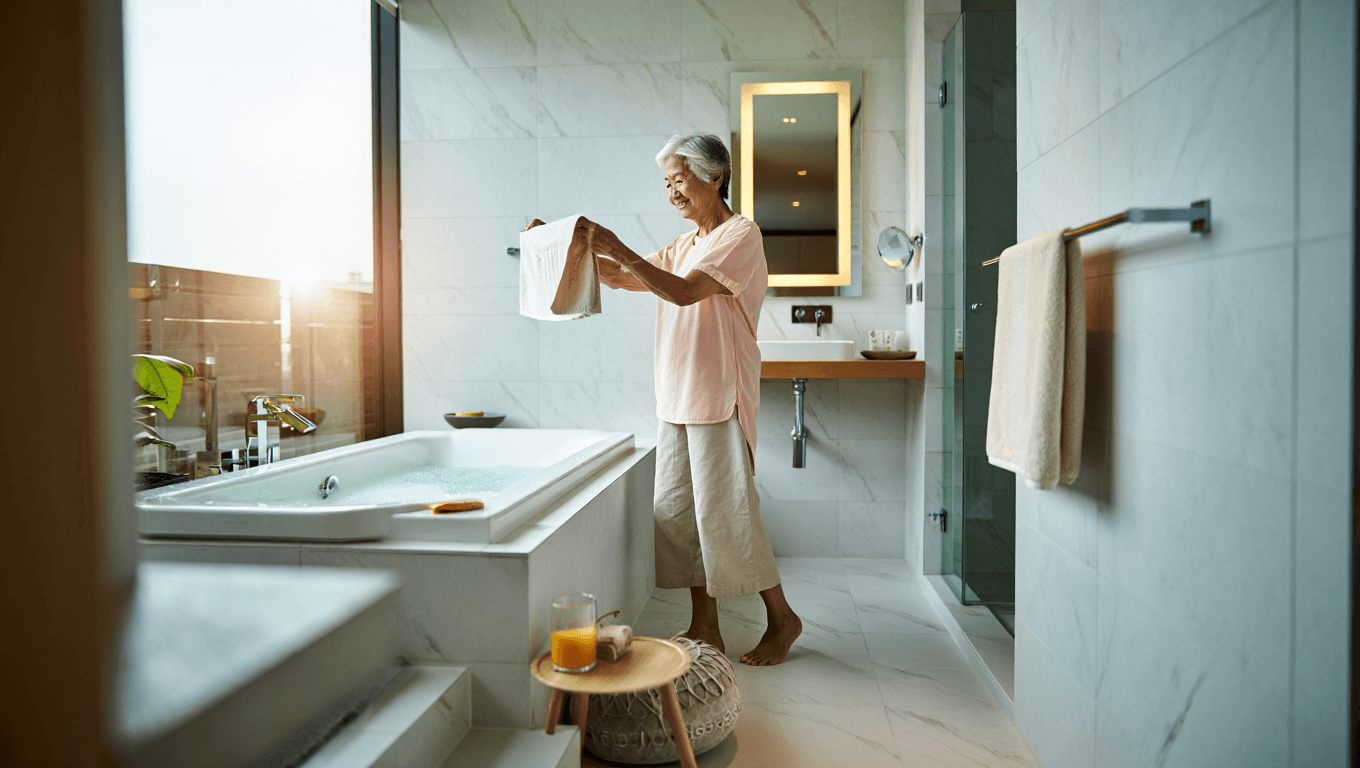
Home design is quietly shifting toward a new ambition: creating spaces that help people not just live longer, but maintain health and independence as they age. That change is moving wellness features—from recovery baths to dedicated meditation areas—out of boutique studios and into private residences, with real-market consequences for homeowners and designers alike.
Major lifestyle publications called attention to longevity as a cultural focus last year, and interior designers say the idea has finally reached their consultations. Where clients once asked for statement pieces or high-performance home gyms, more are now requesting environments tailored to long-term wellbeing and resilience.
Designers respond to a longer view
At Iron House Design, partners Ryno and Jim have shifted how they plan wellness spaces. Their brief increasingly centers on systems and spaces that support everyday health rather than short-term fitness goals. According to Ryno, homeowners are thinking ahead—investing in rooms meant to preserve mobility, recovery and mental calm decades from now.
Industry consultants report a similar pattern: longevity is being treated less like a checklist and more like an ongoing program of care that must be designed into a home’s layout and materials. That changes priorities around lighting, ventilation, flooring and equipment placement—and it changes budgets.
Some clients are embracing these concepts even without a current fitness routine. In one example, homeowners in Montana asked designers to include a comprehensive wellness area—partly because their real estate agent suggested such features could improve resale prospects.
What a modern “longevity suite” can include
- Meditation and quiet zones — low-stimulus spaces for stress reduction and cognitive health.
- Cold plunge or contrast-therapy tubs — aimed at recovery, circulation and inflammation control.
- Sauna — for cardiovascular conditioning and relaxation.
- Salt or inhalation rooms — to support respiratory health and air quality.
- Flexible fitness areas — equipment and open space intended for mobility, balance work and strength training that ages with the user.
- Integrated storage and accessibility features — planning for changing mobility needs over time.
| Feature | Primary benefit |
|---|---|
| Sauna | Promotes circulation, supports relaxation and recovery |
| Cold plunge | May reduce inflammation and speed muscle recovery |
| Meditation room | Improves stress management and cognitive resilience |
| Home gym (adaptable) | Encourages regular movement with low-impact options |
Designing for longevity has practical implications. Mechanical systems must handle humidity and sanitation for saunas and baths; structural considerations change when heavy equipment or water features are installed; and finishes need to be durable, easy to clean, and non-slip. All of these add cost and ongoing maintenance demands.
There are market-level consequences as well. As agents and appraisers start valuing health-oriented features, buyers may expect homes to offer more than aesthetics—placing a premium on spaces that support aging in place. For homeowners, that raises a strategic question: retrofit an existing house now, or plan such amenities into new construction?
For designers, the challenge is to merge clinical utility with domestic warmth. Clients want therapeutic technologies without making their home feel like a clinic. That means integrating equipment discreetly, using materials that read as residential, and designing flexible rooms that can be repurposed over time.
More discussion and case studies are emerging from industry panels and design forums exploring how wellness and longevity intersect with architecture. These conversations highlight trade-offs, best practices and the regulatory or technical issues that can complicate ambitious builds.
As public interest in longevity continues, expect more homes to include dedicated recovery and resilience spaces. For homeowners and buyers, the trend reframes wellness spending as a long-term investment in quality of life and potentially, property value.
Similar Posts
- Boost Your Longevity with This Triple-Threat Device: Now 25% Off!
- Revolutionary Launch Outshines Massage Guns: Get Our Exclusive Discount Now!
- Lower Your Resting Heart Rate for Longer Life: Discover Effective Strategies
- Rug trends set to reshape every home in 2026: designers reveal must-have styles
- Combat Inflammation & Soreness: Discover the Revolutionary Device That Can Help

A champion of quality and authenticity, Emily delves into Australian-made products and their impact on global markets. With a focus on sustainability, she helps readers understand why these goods are leading the trade world.

