
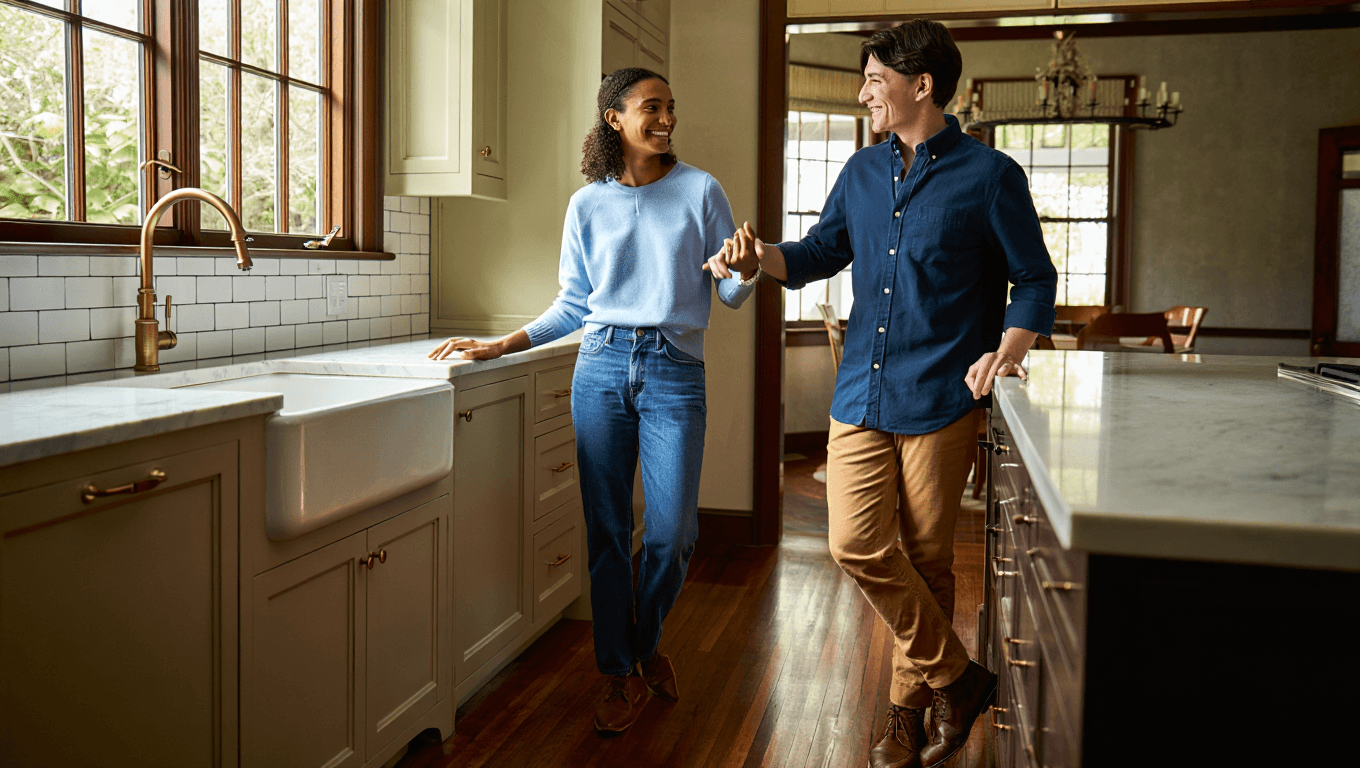
A young couple who traded Los Angeles sun for New England trees found themselves at a familiar crossroads: retrofit a historic house for modern family life or walk away. They kept the 1920s Mediterranean‑Revival home and hired designer Meghan Shadrick to transform formal rooms into practical, everyday spaces without erasing the house’s character.
Why this matters now
Across the country, homeowners and designers are favoring sensitive updates over gut renovations—an approach that preserves craftsmanship, reduces waste, and often saves time and money. In this Chestnut Hill project, those priorities shaped decisions that matter to anyone balancing historic charm with young children, remote work and contemporary living expectations.
- Designer: Meghan Shadrick Interiors
- Location: Chestnut Hill, Massachusetts
- Home size: roughly 4,700 sq ft; five bedrooms, 3.5 baths
- Style: Mediterranean‑Revival, built in the 1920s
- Approach: targeted restoration and reconfiguration rather than a full gut remodel
A targeted overhaul, not a teardown
Rather than strip the house to its bones, the design team prioritized preserving original millwork, tile and other period details. The goal: make rooms easier to live in without erasing the textures and scale that give the house its identity.
Shadrick describes the main brief as pragmatic—transform the home’s formal plan so it functions for a family with two toddlers. That meant rethinking traffic flow, expanding informal seating areas and introducing durable, child‑friendly finishes that still feel curated.
How the plan changed daily life
The changes were surgical. A formal dining room was repurposed into a relaxed family retreat. Existing kitchen cabinets were rearranged so a freestanding island could be added, and a former peninsula became a cozy breakfast nook with a custom banquette. Small interventions—reusing original subway tile for a new vanity, refinishing mantels and wood trim—kept costs and disruption down while maintaining authenticity.
Practical results
Homeowners gained:
- more usable communal space for play and gatherings
- an island and informal dining that support everyday routines
- durable surfaces that tolerate kids and guests
- retained historic features that preserve resale value
Room-by-room highlights
The house reads now as a layered composition—period bones softened with contemporary forms and thoughtful color.
Family room
Originally a formal parlor, this room was outfitted for daily use: comfortable, hard‑wearing upholstery, restored woodwork and a refinished mantel that keeps the room feeling rooted in its era while welcoming casual activity.
Kitchen
Rather than replace cabinetry, the team reconfigured what was there. Moving a former peninsula freed space for an island and created a built‑in breakfast corner—an efficient fix that increased seating and storage without a full remodel.
Sunroom and entry
The glass‑enclosed sunroom retains its original structure but now features contemporary furniture silhouettes that make the space feel fresh. The entryway’s foliage‑inspired wallpaper quietly references the New England setting while connecting circulation paths through the house.
Smaller but meaningful spaces
The butler’s pantry was tuned for function—extra appliances, a coffee counter and a high‑gloss finish for easier cleaning. A children’s bathroom off the bedroom corridor uses resilient materials and playful shapes that hide wear and tear. The den was conceived to flex between guest space, a gaming area and a remote‑work spot.
Design choices with long‑term benefits
By prioritizing conservation and selective interventions, the project achieved three outcomes: it kept distinctive historic details intact, created a layout that supports modern family rhythms, and limited waste and expense compared with a full gut renovation. For homeowners eyeing older properties, this case underlines an increasingly popular strategy: adapt thoughtfully rather than replace wholesale.
About the designer: Meghan Shadrick Interiors is a boutique firm that works across New England and beyond to deliver livable, personality‑driven homes—whether in townhouses, coastal cottages or suburban houses—by blending vintage finds with contemporary comfort.
Similar Posts
- Stunning D.C. Row House Transformation: Inside Mike and Courtney’s Chic Makeover by Jeremiah Brent!
- Stunning Family Home: Light, Spacious Interiors Await You!
- Cottage goes floral: inside a homeowner’s bold bloom makeover
- Frank Lloyd Wright-inspired Los Angeles home evokes golden-age Hollywood
- Ladue Tudor Estate: Discover the Charm of Eclectic Elegance in a Historic Gem

A champion of quality and authenticity, Emily delves into Australian-made products and their impact on global markets. With a focus on sustainability, she helps readers understand why these goods are leading the trade world.

