
Hawai‘i remains the image of tropical escape — warm sand, surf and palm trees — but the islands are also at a crossroads. Visitor numbers have rebounded, tensions over crowding and environmental strain are rising, and a new state fee to fund climate and conservation projects is now in effect.
More than 9.5 million people traveled to Hawai‘i in 2023, a year-over-year increase that has intensified long-running concerns about overcrowded beaches, overused trails and pressure on cultural sites. Local sentiment has shifted: a 2024 Hawai‘i Tourism Authority survey found that just 56% of residents now believe tourism brings more benefits than problems, down sharply from 80% in 2010.
Why it matters now
Tourism supports many island jobs, yet the growing footprint of visitors affects everyday life for residents and the health of fragile ecosystems. Policymakers and community groups are asking travelers to take concrete steps to reduce harm — and as of January 1, 2026, visitors pay a small surcharge intended to finance resilience and stewardship projects across the state.
Start by learning before you arrive
Context changes how you behave. Read accessible histories and first-person accounts about the islands’ past — from the Hawaiian Kingdom through the overthrow and the modern cultural revival. State and nonprofit resources offer primers on local customs, land issues and language that will help you show respect and avoid inadvertent offense.
One Hawaiian concept visitors should know is kuleana — a sense of responsibility to the land and community. Visiting with that mindset changes simple decisions: where you walk, what you buy and how you interact with people and place.
Words matter: learn a few Hawaiian phrases
Knowing basic Hawaiian terms can open doors and signal respect. Simple words such as aloha and mahalo are widely used, and learning how to pronounce place names or request permission shows care. Free language apps now include beginner Hawaiian lessons, which are handy for travelers who want to prepare before arrival.
Biosecurity: don’t bring plants or pests
Hawai‘i’s isolation makes its agriculture and native forests vulnerable to disease. All plants and animals entering the state must be declared and inspected. Certain items — for example, some seedlings, fruit, taro and coconut plants — are restricted and may require permits, treatments or quarantine.
On flights to Hawai‘i you’ll be asked to complete a short agricultural declaration. A digital option called Akamai Arrival is being used on select domestic routes to simplify the process, but the underlying rules still apply: don’t carry material that could introduce invasive species.
Small actions that make a difference
- Clean shoes and luggage before you board to avoid transporting seeds or insects.
- Follow posted signs and closures on trails and at cultural sites — they protect people and fragile habitats.
- Keep your distance from wildlife. Harassing or touching protected species, like Hawaiian monk seals or green sea turtles, is illegal and can carry severe penalties.
- Use reef-safe sunscreen; Hawai‘i prohibits certain chemical sunscreens known to harm coral.
The Green Fee and what it funds
In 2025 the state passed legislation adding a modest surcharge to short-term stays and cruise passengers; the charge took effect January 1, 2026. Though the percentage increase is small, the revenue is expected to fund climate resilience, shoreline protection, native habitat restoration and related stewardship work across the islands.
How to spend and move like a thoughtful visitor
Supporting local businesses keeps money in island communities. Choose farmers’ markets, family-run eateries and independent shops rather than national chains when possible. Many restaurants proudly list the farms that supply their produce — buying locally grown food helps farmers and reduces the carbon footprint of your meals.
Transportation choices also matter. Public buses on Oʻahu, Maui and other islands provide an alternative to rental cars and can ease traffic congestion. Where bus service is limited, consider rideshares, shuttles or organized tours that consolidate trips rather than driving alone.
Engage respectfully: culture and conservation
Look for authentic cultural experiences led by community members — museum programs, guided site visits and locally run workshops offer meaningful insight. Hotels and visitor centers often list classes in hula, lei making and traditional crafts; these can be educational when offered by qualified instructors.
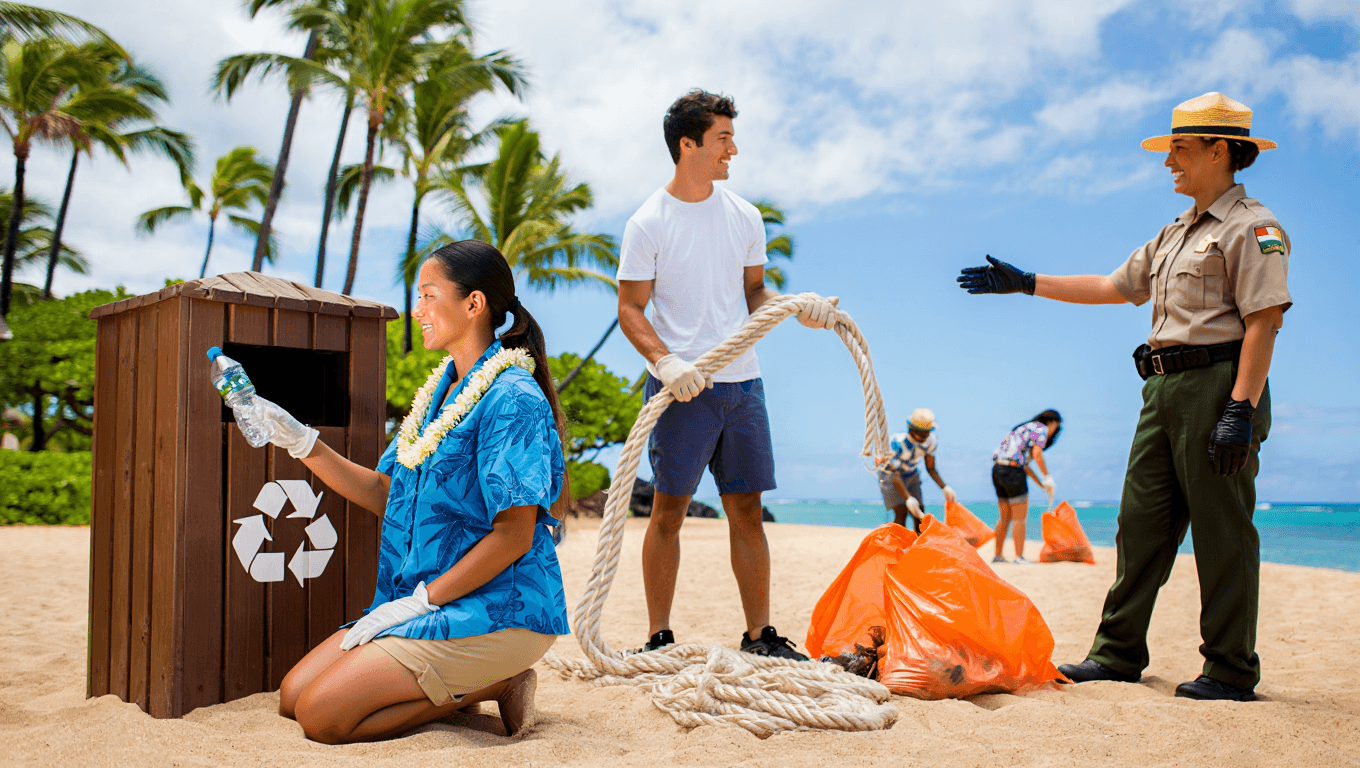
Volunteering with beach cleanups, native plantings or marine debris programs lets visitors give back in a tangible way. Organizations that match short-term volunteers with local needs can make participation straightforward and beneficial for both guests and host communities.
Be courteous — and legal
Simple courtesies go a long way: keep beaches and parks clean, obey parking rules, and drive considerately. Laws protect endangered wildlife — approaching or disturbing species such as monk seals can result in criminal charges, fines and prison time. Respect closures marked “kapu” (no entry) and other directives intended to protect sacred places and public safety.
Quick checklist before you go
- Read a brief history of the islands and key cultural background.
- Pack only permitted plant and food items; complete the agricultural declaration.
- Scrub shoes and luggage to remove soil and seeds.
- Bring reef-safe sunscreen and a reusable water bottle.
- Plan at least one visit to a locally run market, farm or cultural program.
- Consider public transit or shared transport options where available.
Hawai‘i’s allure is real, but sustaining that appeal requires visitors to act with awareness and restraint. A thoughtful trip protects the islands’ ecosystems, supports residents and deepens your experience — not just for one visit, but for the generations that follow.
Similar Posts
- Lahaina Fire Update: Essential Info for Travelers on Water Rights & Native Hawaiian Impact
- Bywater Battle: How Tourism is Reshaping New Orleans’ Iconic Neighborhood
- Mallorca Urges Tourists: Commit to Protecting Our Island’s Stunning Beauty
- Master 8 Key Leave No Trace Principles: Transform Your National Park Visit
- Explore Petra Responsibly: Essential Tips for an Ethical Visit

A globe-trotter and international trade enthusiast, Oliver explores the connection between business travel and trade opportunities.

