
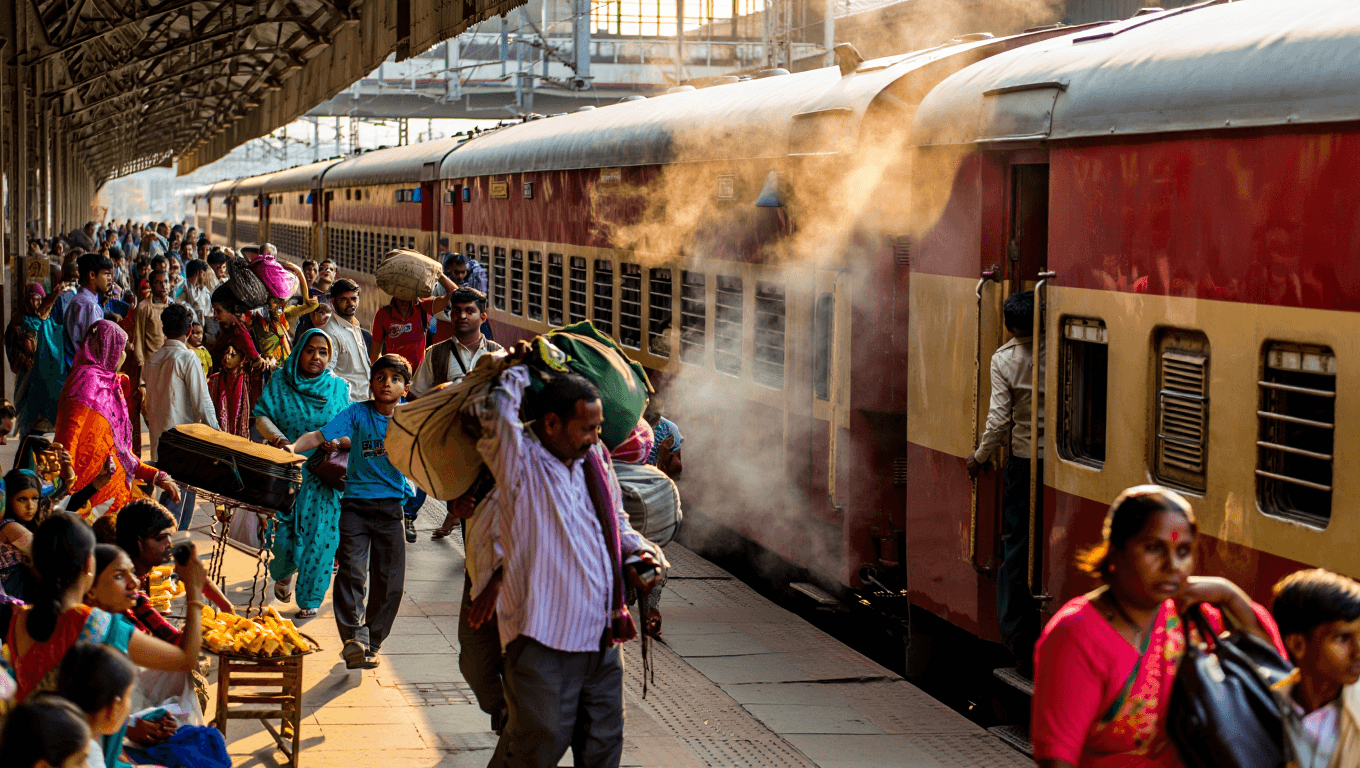
Traveling by rail in India remains one of the most practical — and often most memorable — ways to cross the country, whether you’re moving between metro hubs or reaching villages off the beaten path. With recent timetable updates and ongoing infrastructure projects, knowing how India’s railways operate today can save time and hassle and shape the whole journey.
More than a transport network
India’s railways stretch across thousands of miles and still act as a social and economic backbone: freight, commuters and long-distance passengers all share the same rails. Trains thread cities, farmland, forests and deserts, making places accessible that would otherwise take hours of bumpy road travel.
Because the system is state-run, basic services are standardized nationwide, but weather — especially the monsoon — and regional terrain can cause significant disruption. Expect routine small delays; plan ahead for any travel during heavy-rain or winter mountain seasons.
What to expect on board
Train interiors vary wildly. A typical carriage can feel noisy and crowded one hour, quiet and almost private the next. Vendors, sleeping families, students and commuters create a continuous, lived-in atmosphere that travelers either love or find overwhelming.
One practical reality: passengers often ask others to “kindly adjust” their seating to accommodate newcomers. Even with a reservation, you may be asked to shift; in shared coaches this is part of the social contract of rail travel.
Types of trains at a glance
| Type | Best for | Typical features |
|---|---|---|
| Superfast / Express | Long-distance, intercity travel | Fewer stops, often fully air-conditioned, catering on many services |
| Passenger / Local | Short hops, regional travel | Frequent stops, lower fares, basic onboard comfort |
| Luxury trains | Curated tourist experiences | High-end cabins, guided itineraries, premium dining |
| Scenic / Heritage | Leisure travel and sightseeing | Slow routes, panoramic views, niche tourist appeal |
Classes and comfort
Booking class determines comfort and privacy. The common options include Sleeper class (affordable, crowded but authentic), and air-conditioned tiers such as Third AC, Second AC and the private cabins of First AC. General class is unreserved and can be extremely packed.
Air-conditioned coaches usually provide blankets and pillows on overnight journeys and offer better protection from the elements and noise. If you plan to travel in non-AC coaches, bring basic bedding and a power bank — charging points are not guaranteed.
How to buy tickets
The government-operated booking portal, IRCTC, is the primary online channel, but it can be difficult to use from abroad. Reputable travel agencies and major Indian booking platforms are alternative routes for non-resident buyers.
Reservations open 60 days before departure and popular routes fill quickly. For last-minute plans, the Tatkal quota releases limited seats (a day before travel) at set times, while the Foreign Tourist Quota reserves a small number of seats for foreign passport holders up to a year in advance.
Onboard services, stations and costs
Many long-distance trains include pantry services or allow third-party meal deliveries at scheduled stations. Vendors on platforms and between coaches sell snacks and chai, but hygiene standards vary. Larger stations offer waiting rooms, basic eateries and porter services.
Ticket prices range dramatically: short, unreserved trips can cost the equivalent of a few dollars, while luxury tourist trains run into the thousands. Standard fares are regulated, so discounts for foreigners are rare.
Practical tips for smoother travel
- Carry a lock and secure straps for luggage kept under berths or on overhead racks.
- Keep official ID accessible at all times — ticket checks are routine.
- Install the IRCTC app or an equivalent service to track live train status and platform information.
- Pack a small hygiene kit (soap, sanitizer, toilet paper) and a power bank for devices.
- If mobility is a concern, request a lower berth when booking; services like wheelchair assistance exist but can be unreliable.
How trains stack up against planes and driving
For most long-distance journeys within India, trains are the most cost-efficient option and often more reliable than driving for non-local drivers. Flights can save hours but are costlier and may not serve smaller cities. Driving yourself is challenging on crowded, unfamiliar roads.
Remember to factor last-mile connections: many stations are near bus stands, but transfers to airports frequently require additional road travel.
Accessibility and limitations
Wheelchair access and step-free routes remain limited at many stations and on several older trains. Boarding can involve steep steps, long platform walks and narrow ladders to upper berths. Travelers with reduced mobility should contact railway services in advance and allow extra time.
Ultimately, train travel in India demands flexible planning and a readiness for unpredictability — and it often rewards patience with rich, communal experiences and landscapes you won’t see from a plane.
Similar Posts
- Explore Spain by Train: Eco-Friendly Travel Has Never Been More Delightful!
- Europe’s Night Trains: A Game-Changer for Travelers Seeking Alternatives to Flying!
- Experience the Magic of Sleeper Trains: Essential Tips for First-Timers
- Top US Travel Tips: Discover the Best Ways to Explore America!
- Explore Wales: Discover Epic Scenery While Traveling

A globe-trotter and international trade enthusiast, Oliver explores the connection between business travel and trade opportunities.

