
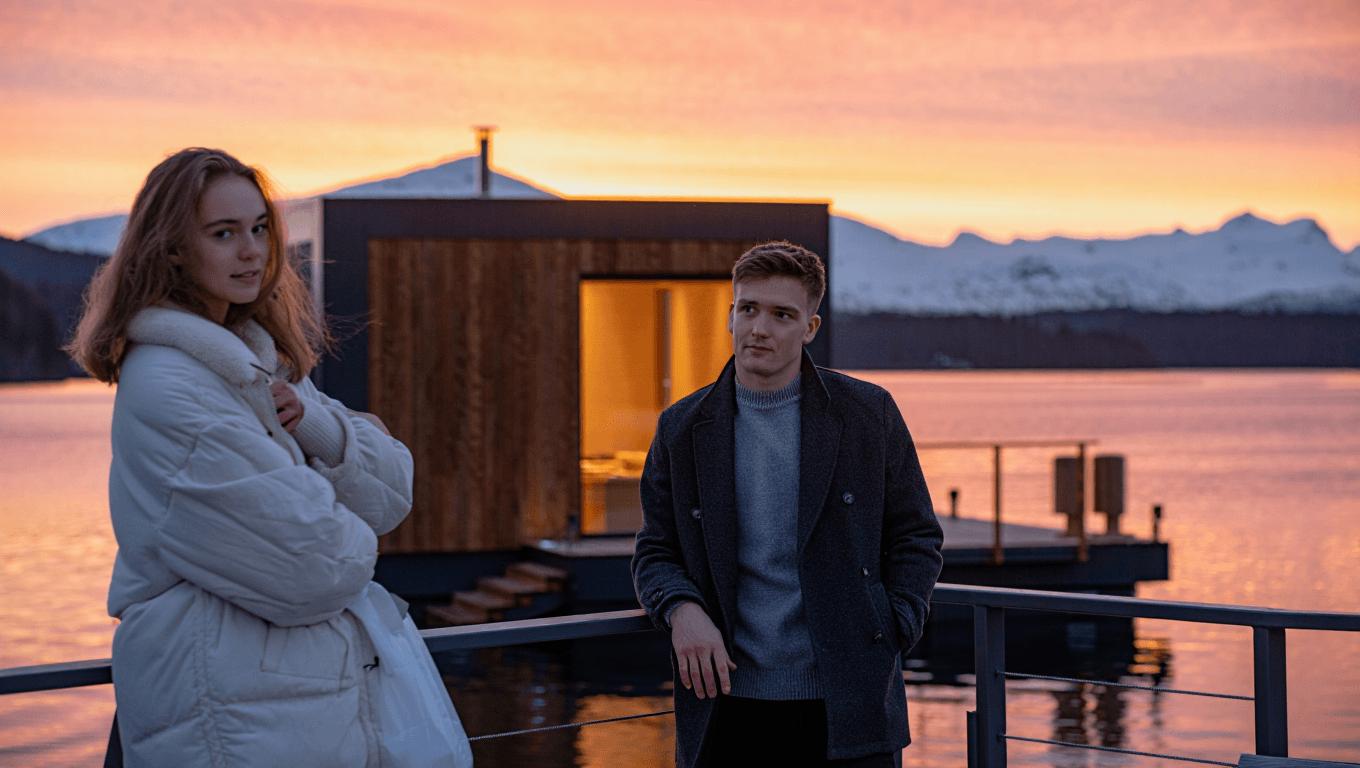
A wave of distinctive new accommodations — from floating saunas to reclaimed village estates and glass sleeping pods — is changing how people plan trips. These openings underline two clear trends: travelers now seek purposeful stays that combine comfort with conservation, and boutique design continues to push the boundaries of where and how we sleep.
Arctic Bath — Swedish Lapland
Set on the Lule River, this circular timber structure looks arresting from a distance and is designed to be experienced up close. Guests can alternate between a chilled plunge pool, restorative saunas and warm lounges, while a handful of angular cabins onshore provide the quieter base for exploring the winter landscape or the midnight-sun season.
Its operation adapts with the seasons: floating in summer and frozen into the ice in winter, the property is marketed as a year-round destination for those drawn to minimalist Nordic design and thermal rituals. For travelers, that means an unusual blend of architecture and climate-led activity.
Amanyangyun — Relocated heritage in China
In an unprecedented conservation effort, an entire camphor forest and a cluster of historic houses were lifted and reassembled on the outskirts of Shanghai to preserve both trees and traditional architecture. The result is a tranquil, 10-hectare retreat built around carefully restored Ming- and Qing-era structures.
This project is notable not only for its scale but for the wider question it raises about preserving cultural landscapes amid development pressures. The site now operates as a high-end resort with cultural programming, a spa and restaurants.
Ideal Eco-Hostel — Paraguay
Run by a conservation NGO, this modest hostel channels its revenue back into habitat protection and research. Located near Pilar, it offers basic shared accommodation and the option for guests to join hands-on conservation activities — a model increasingly common among community-led ecotourism projects.
Staying here is less about luxury and more about direct engagement: volunteers and budget travelers pay modest rates to support local science and education efforts while exploring Paraguay’s biodiversity.
- Arctic Bath — Unique feature: floating timber ring with spa; seasonal operation.
- Amanyangyun — Unique feature: relocated historic village and preserved camphor forest; cultural programming.
- Ideal Eco-Hostel — Unique feature: NGO-run, volunteer opportunities; budget-friendly.
- Thurgau Bubble Hotel — Unique feature: transparent sleeping domes; immersive stargazing.
- Blackadore Caye — Unique feature: renewable-energy private island focused on restoration.
- White City House — Unique feature: boutique conversion inside a listed broadcasting centre.
- One&Only Gorilla’s Nest — Unique feature: foothills access to Volcanoes National Park.
- The Siren Hotel — Unique feature: restored 1920s Wurlitzer building in Detroit’s revival.
- The Tasman — Unique feature: heritage buildings reimagined with contemporary interventions in Hobart.
- Eki Chat Yurt Camp — Unique feature: community-run yurt camp serving trekkers and bikers in Kyrgyzstan.
Thurgau Bubble Hotel — Switzerland
Transparent domes placed across rural settings invite guests to sleep under the stars without sacrificing a proper bed. Some bubbles stay put seasonally; others are relocated to showcase different views — vineyards, orchards or lakeside gardens. The experience is simple, pared-back and focused on nature immersion.
Blackadore Caye — Belize
Planned as an eco-driven private island resort, the project emphasizes renewable power, rainwater harvesting and habitat regeneration. Developers have announced intentions to set aside a significant portion of the island as protected reserve, with research facilities for marine and climate studies. For eco-conscious travelers, the site represents a high-profile attempt to combine luxury tourism with restoration work.
Projects like this can push conservation funding into fragile areas, but they also raise questions about scale and local impact — a balance that prospective visitors should weigh when choosing where to spend their travel dollars.
White City House — London
A well-known members’ brand converted part of the former BBC Television Centre into a 45-room boutique hotel while preserving the building’s iconic circular core. The development is part of a larger mixed-use regeneration that includes entertainment and residential elements, illustrating how historic broadcast sites are being repurposed for contemporary urban life.
One&Only Gorilla’s Nest — Rwanda
Nestled near the Virunga foothills, this property offers close access to Volcanoes National Park and the region’s gorilla-tracking experiences. It combines comfort with ecological proximity, positioning itself for travelers who want premium amenities together with wildlife encounters.
Stays in this region bring both opportunity and responsibility: visitor dollars can support conservation, but they also demand strict adherence to park rules to reduce disturbance to vulnerable species.
The Siren Hotel — Detroit
Opening in a restored 1926 Wurlitzer building, this 106-room boutique hotel participates in the city’s cultural and economic revival. Its location and design nod to Detroit’s musical heritage while offering easier access to galleries and institutions via the city’s streetcar line.
The Tasman — Hobart
Set within refurbished Georgian hospital buildings, this hotel blends preserved fabric with contemporary glass-and-steel inserts and a curated art program. Its central location places guests within walking distance of the waterfront and civic squares, anchoring it in Hobart’s evolving hospitality scene.
Eki Chat Yurt Camp — Kyrgyzstan
Operated by local communities in the Eki Chat valley, the camp offers traditional yurts as basecamps for trekking and mountain biking. It is explicitly part of a broader eco-tourism initiative aimed at creating sustainable income streams while protecting the surrounding landscapes. Practicality is key here: expect basic comforts and authentic local hospitality.
What ties these diverse openings together is not a single design trend but an attitude: travelers increasingly prioritize stays with an environmental or cultural payoff. Whether it’s sleeping beneath a transparent dome, contributing to reforestation, or resting in a carefully relocated heritage village, modern hospitality often markets an experience as much as a room.
For readers planning trips now, consider three quick takeaways:
- Choose impact over novelty: Ask how a property contributes to local conservation, employment or cultural preservation before booking.
- Match comfort to purpose: Remote or community-run sites may be transformative but usually involve simpler amenities and travel logistics.
- Book responsibly: Peak seasons and small-capacity properties can fill fast; check cancellation and conservation policies to avoid unintended harm.
- 16 Breathtaking Eco-Hotels: Perfect Picks for the Eco-Conscious Traveler
- Explore Slovenia’s New Green Route: A Dream for Independent Travelers
- 12 Eco-Friendly Getaways: Perfect Mix of Adventure and Sustainability!
- Must-Visit Eco-Luxury Resorts Around the World: Discover Sustainable Paradise!
- Explore Europe by Night: Sleeper Train Links Brussels to Berlin
These openings illustrate how accommodation is evolving: more than places to sleep, hotels and camps are becoming platforms for storytelling, stewardship and meaningful travel experiences.
Similar Posts

A globe-trotter and international trade enthusiast, Oliver explores the connection between business travel and trade opportunities.

