
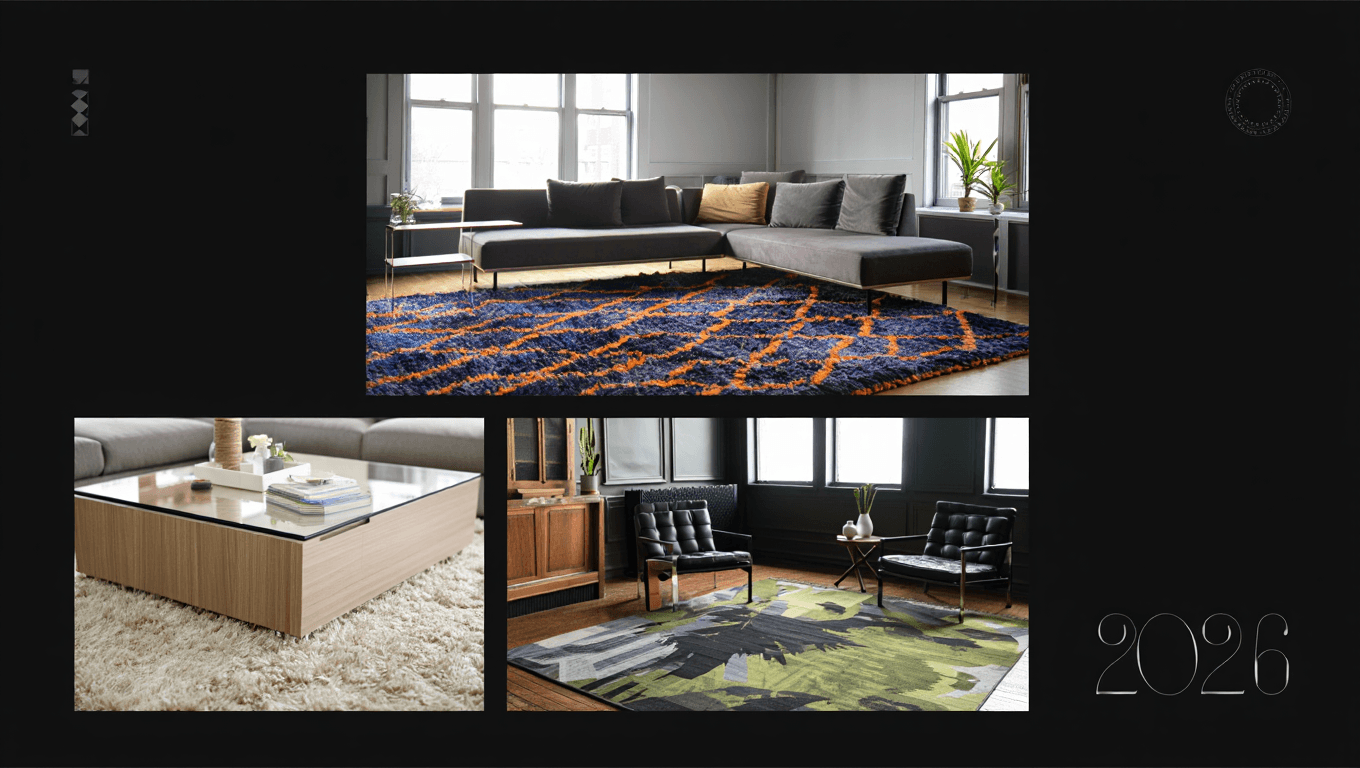
As homes continue to serve as offices, gyms and social hubs, rugs are doing more than decorate — they’re solving real, modern needs. Designers say 2026’s rug trends lean toward durable materials, refined craft and quieter, more intentional color and texture choices that respond to lifestyle and climate pressures.
Craftsmanship meets practicality
After years of supply-chain disruptions and a growing focus on longevity, many designers are steering clients toward rugs that balance artisanal detail with everyday resilience. That means handwoven techniques remain desirable, but are increasingly paired with finishes that make rugs easier to clean and maintain.
Expect to see more pieces labeled as stain-resistant and washable, especially sized for high-traffic zones like entryways and home-office workstations. Those technical improvements don’t always sacrifice texture: new low-profile weaves mirror the look of handcrafted shag while staying practical for chairs and rolling office chairs.
Six key rug trends to watch in 2026
| Trend | What it delivers | Best for |
|---|---|---|
| Sustainable fibers | Natural or recycled yarns with transparent sourcing—lower footprint without losing hand | Living rooms, bedrooms where longevity matters |
| Washable, performance rugs | Machine- or hand-washable constructions and protective finishes for spills and pets | Kitchens, playrooms, home offices |
| Textural layering | Thin flatweaves under plush, tactile rugs to add depth and define zones | Open-plan spaces, multiuse rooms |
| Border and scale play | Strong edges, oversized motifs or scaled-down patterns to create focal points | Entryways, dining rooms |
| Acoustic-focused rugs | Denser weaves and underlayers designed to reduce noise in busy households | Home offices, apartments, media rooms |
| Heritage and artisan revivals | Reworked vintage motifs and region-specific techniques adapted for contemporary interiors | Bedrooms, sitting rooms seeking character |
Why these trends matter now
Homes are under new pressures: more wear from hybrid routines, a growing appetite for sustainable purchases and higher expectations for multi-functionality. For buyers, that changes the calculus from “what looks good” to “what performs and lasts.”
Retailers and manufacturers have responded by pushing improvements in dye stability, stain barriers and recycled-content certifications, so consumers can make choices that hold up visually and ethically. For designers, rugs are once again a subtle technical tool — regulating acoustics, framing spaces and signaling intention.
Practical tips from industry practitioners
- Choose natural fibers like wool or jute for warmth and durability; look for traceable sourcing if sustainability is a priority.
- Reserve washable or low-pile rugs for areas with spills or frequent foot traffic to reduce replacement cycles.
- Use layering—place a thin, inexpensive flatweave under a statement rug to protect it and add dimension.
- Pay attention to rug scale relative to furniture: borders and large motifs perform best when they aren’t visually cut by table legs or sofas.
- For rentals or small apartments, invest in rugs with acoustic benefits; thicker pads beneath them improve sound absorption without permanent alterations.
Designers also note an ongoing appetite for personality: while neutral palettes and muted tones remain dominant, strategic pops of saturated color or a single richly patterned piece can animate a room without committing to a full redesign.
Costs and sustainability considerations
Higher craftsmanship and certified materials typically carry a premium, but several market shifts are narrowing that gap. New supply chains for recycled yarns and scaled production of performance finishes have made mid-price rugs more durable than in past seasons.
Still, consumers should review care instructions and warranty terms carefully. A slightly higher upfront spend on a rug with a clear repair or recycling pathway often reduces lifetime cost and environmental impact.
As 2026 unfolds, rugs are moving beyond purely aesthetic decisions to become pragmatic elements of home design. Whether you prioritize climate impact, sound control, or low-maintenance living, current trends give homeowners more options to match appearance with function.
Similar Posts
- Immersive wallpaper revolutionizes interiors: designers turn to full-room murals
- Animal print room ideas: experts share easy fixes to upgrade your space now
- Paint colors HGTV designers swear by: 12 trending shades to try now
- Interior design styles shaping homes today: experts name 30 must-see looks
- Kitchen hardware trends 2026: designers name must-have finishes and styles

A champion of quality and authenticity, Emily delves into Australian-made products and their impact on global markets. With a focus on sustainability, she helps readers understand why these goods are leading the trade world.

