
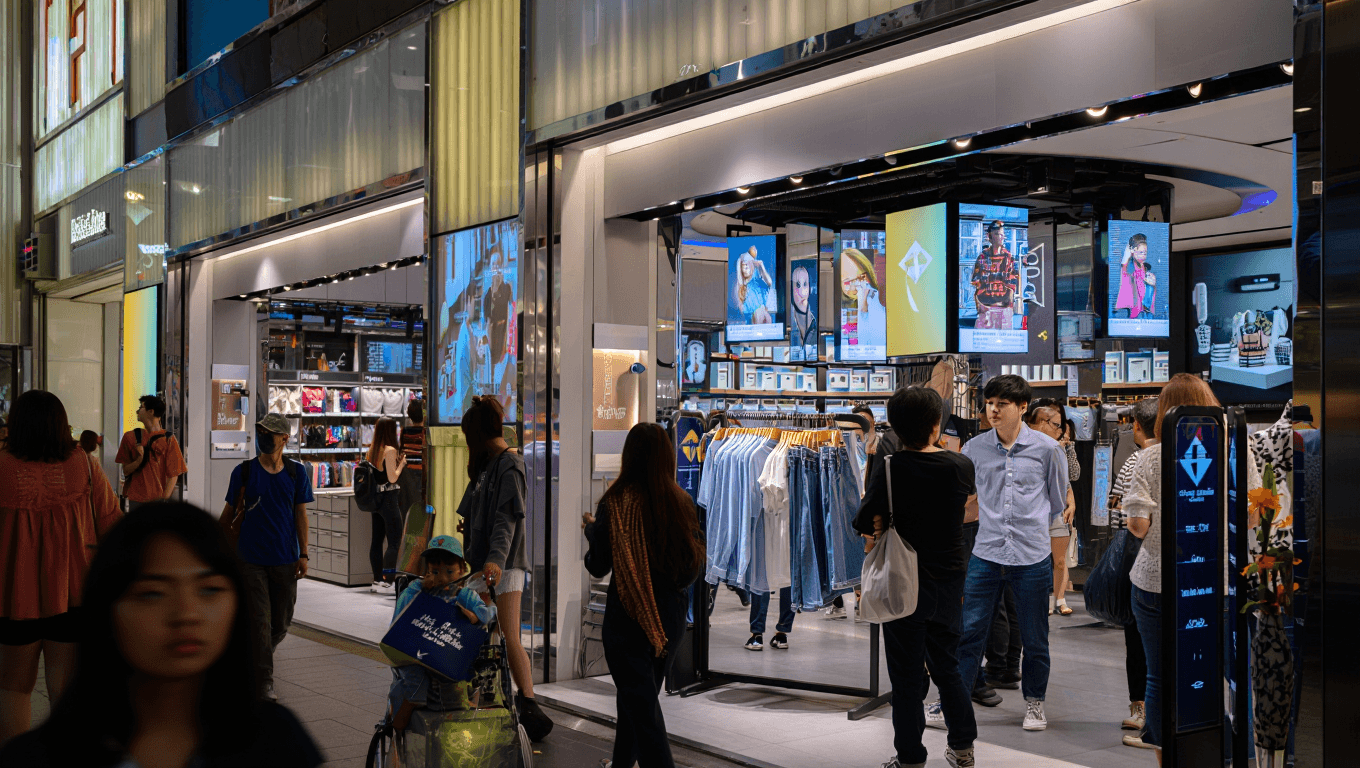
Shopping in Asia is shifting from simple purchase transactions to multi-sensory experiences that blend entertainment, discovery and machine intelligence. With the Asia-Pacific region on track to become the world’s largest consumer market by 2035 — projected to reach roughly $36 trillion in private consumption — these changes matter now for brands and shoppers alike.
Stores as destinations, not shelves
Physical retail is evolving into environments designed to be explored rather than just browsed. Rather than arranging products on static displays, leading retailers are creating theatrical spaces where sensory design, staged moments and hospitality-style services shape how people experience a brand.
According to research by Collinson, about 80% of APAC shoppers use brand rewards to access distinctive experiences — a signal that well-crafted in-person activations can deepen loyalty and increase dwell time. When stores feel like places people want to visit, they tend to spend more time and form stronger emotional ties to a label.
Recent examples underscore the trend: luxury houses have repurposed boutique real estate into hotel-like settings with bars, terraces and curated displays that echo a broader lifestyle story rather than just a product catalogue.
Play and surprise as commerce tools
Across the region, retailers are inviting customers to participate. Interactive elements—ranging from immersive theatre pop-ups to game-like retail mechanics—turn browsing into an active, memorable pursuit.
Survey data from Criteo indicates a large share of Indian online shoppers find e-commerce uninspiring; nearly three quarters say digital shopping lacks excitement, and a significant minority call it a chore. That gap creates an opening for brands to inject delight through surprise, challenges and reward loops.
Pop-up experiences that cast staff as characters or incorporate branded puzzles have proven effective at driving social sharing and repeat visits. When retail engages emotions and curiosity, conversion can follow naturally rather than being forced.
AI behind the scenes, human-focused front of house
Machine intelligence is becoming part of everyday shopping routines across Asia, but customers increasingly expect it to be discreet and helpful rather than intrusive. Bain & Company reports that some 85% of Southeast Asian shoppers already use or consider AI tools for discovery — showing demand is high for intelligent assistance.
For retailers, the priority is to let AI handle operational complexity—pricing, inventory routing, personalized recommendations and logistics—so shoppers face fewer frictions when choosing and paying. The smartest deployments blend automation with transparency: customers understand they’re benefiting from AI while still feeling in control.
Integrated ecosystems are emerging where discovery, payment and delivery sit inside a single AI-driven interface. These models aim to reduce the friction of switching between apps and services, creating a smoother end-to-end journey.
Practical takeaways for brands and shoppers
- Design for curiosity: Invest in spaces or online formats that reward exploration rather than only showcasing product features.
- Make play purposeful: Use gamified moments to deepen brand narratives and encourage social sharing, not just gimmicks.
- Let AI do the heavy lifting: Automate routine operations while preserving clear choices and control for the customer.
- Measure experience value: Track engagement, time spent and repeat visits alongside sales to capture the full return on immersive investments.
These shifts are not theoretical. As the region’s consumer market expands, retailers that combine immersive design, playful interaction and seamless intelligence will be better positioned to capture attention and wallet share.
For shoppers, the practical consequence is a retail landscape offering more discovery and fewer small frictions; for brands, the challenge is to build experiences that are both memorable and operationally sustainable.
Similar Posts
- Value Retail in India: Attracting the Aspirational Shopper for a Bright Future!
- NRF 2025: Discover Top Retail Trends at Retail’s Big Show!
- Esports: Unlocking Strategic Opportunities for APAC Brands!
- Retail Trends for 2028: Key Strategies to Elevate Your Brand!
- Asia’s Middle-Class Youth Embrace Slow Living: Discover the New Luxury Trend!

An expert in global markets, Sophia analyzes trends and innovations shaping the future of export. Her strategic insights help businesses stay ahead of the curve.

